Eventarchitect
the art of creating
  • Language
    • česky
    • deutsch
    • english
    • espanol
    • français
    • nederlands
  • Our references
  • Project showcase
  • Books
  • Knowledge hub
  • Contact
22 Apr 2026

admin Knowledge hub, Uncategorized 0 comments

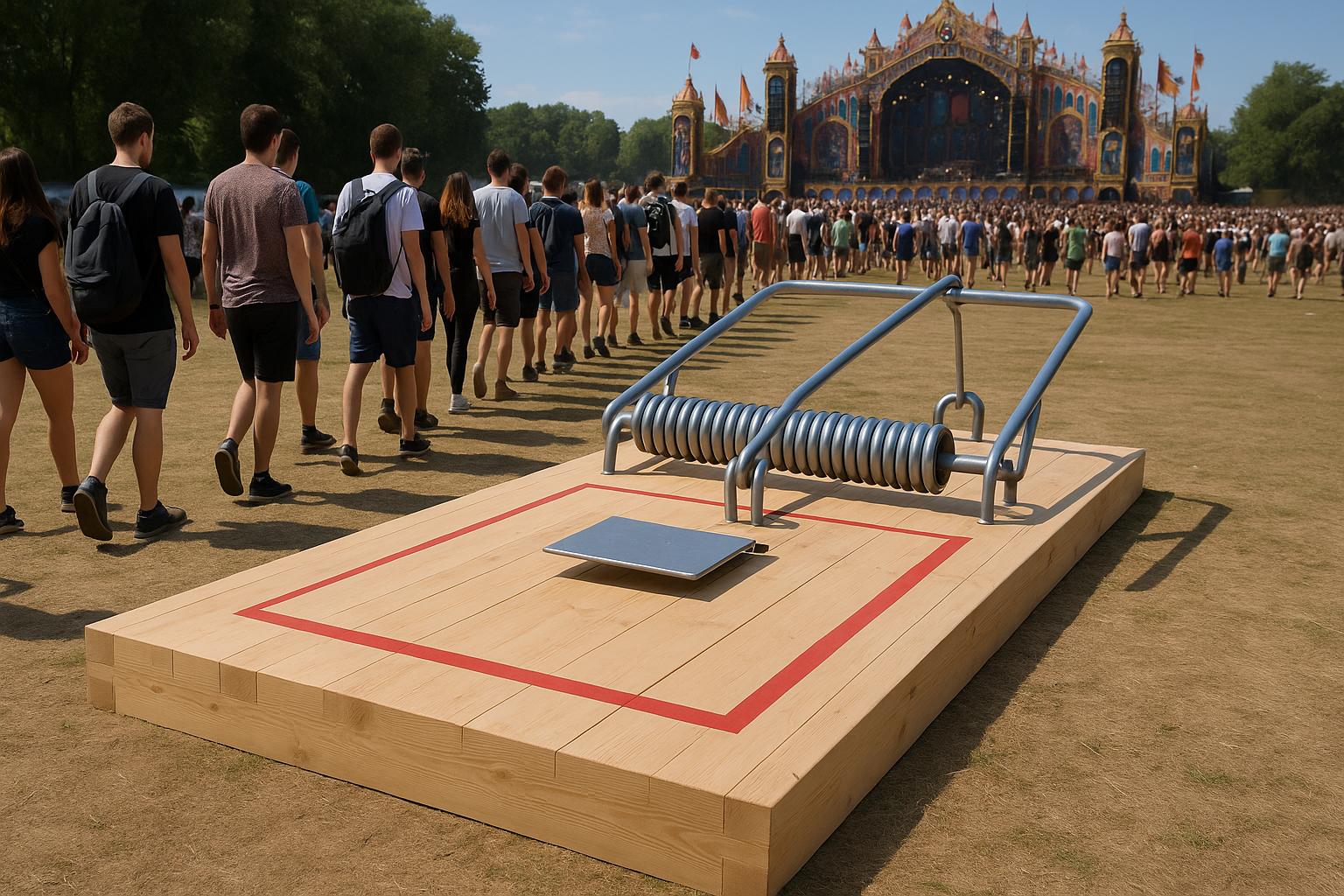
Crowd Management is Behaviour Design

Many still reduce crowd management to barriers, guards and emergency exits.

Yet research in behavioural science, environmental psychology and systems design suggests something deeper: people respond primarily to space, signals and social cues.

Crowds rarely become problematic simply because many people are present. High attendance alone is not the main predictor of incidents. Problems emerge when density combines with uncertainty, poor visibility, bottlenecks or conflicting flows.

This distinction matters.

A dense crowd at a well-designed festival entrance may remain calm. A moderate crowd in a confusing foyer may become stressed.

Kurt Lewin’s classic formula remains relevant:

Behaviour = Person × Environment

In event management, this means behaviour is rarely random. It is often designed.

Three variables every organiser should study first:

  1. Density: how many people per square metre?
  2. Flow: are movements continuous or interrupted?
  3. Perception: do people understand where to go?

These are the variables most organisers notice.

But they are only part of the picture.

Seven hidden variables that often determine outcomes:

  1. Motivation: why are people moving? Arrival, exit, urgency, curiosity, alcohol, reward?
  2. Social influence: people copy others, follow groups, queue where others queue.
  3. Emotional state: excitement, frustration, fear or impatience can rapidly alter behaviour.
  4. Time pressure: session starting, train leaving, artist beginning, rain approaching.
  5. Communication quality: clear updates calm people; silence creates assumptions.
  6. Environmental friction: narrow doors, blind corners, poor signage, stairs, obstacles.
  7. Context: weather, culture, demographics, previous incidents, event type.

Example:

At city marathons, spectators often create more congestion than runners.

Why?

Not because of density alone.

But because motivation, emotion, time pressure and social copying all interact.

That is why advanced organisers analyse behaviour systems, not only attendance numbers.

Crowd management is therefore not merely security management.

It is behaviour design.

Because when visible variables are managed, events function. When hidden variables are understood, events excel.

Learn more via our knowledge hub: https://eventarchitect.com/knowledge-hub/

15 Apr 2026

admin Knowledge hub 0 comments

Choosing the right Economy

Throughout this series (the last four posts), we explored how value creation has evolved.

From products and services to experiences, transformations and purpose.

But an important question remains: Which economy should organisations focus on?

The answer is not the same for everyone.

The agrarian, industrial, service, experience, transformation and purpose economies are not competing models.

They are different lenses through which value can be created.

Most organisations operate in several of them at the same time.

A manufacturing company may primarily operate in the Industrial economy.

A hotel may focus on the Experience economy.

A leadership programme may aim for transformation.

A sustainability summit may operate within the Purpose economy.

None of these approaches is inherently better than the others.

What matters is alignment.


One event, multiple economies

A simple example illustrates this.

Imagine organising an international conference.

If the goal is efficient knowledge transfer, the event mainly operates within the Service economy.

If the goal is to create memorable moments and engagement, it moves into the Experience economy.

If the goal is to develop leadership skills or change professional behaviour, it enters the Transformation economy.

And if the goal is to bring organisations together to address societal challenges, it becomes part of the Purpose economy.

The same event can even combine several of these layers.

That is increasingly what we see in the MICE industry today.

Successful events often integrate services, experiences, learning and purpose.


The real strategic question

So the real strategic question is not: Which economy comes next?

The real question is: What kind of value do we want to create?

Three questions can help organisations find their answer.

  1. What do our stakeholders expect? Different stakeholders seek different forms of value.
  2. What kind of change do we want to create? Memories, learning, transformation or societal impact.
  3. What role does our organisation play in a broader ecosystem? Some organisations primarily deliver services. Others facilitate learning or collaboration.

The most successful organisations understand which economy defines their value creation and design their strategy accordingly.

Because ultimately, value is not defined by the size of an event, the scale of a company or the complexity of a product.

It is defined by the meaning it creates for people.

And sometimes the greatest value is not what we produce.

But what people experience, learn, become and contribute.

Discover more insights in the knowledge hub https://eventarchitect.com/knowledge-hub/

Learn more in From Experience to Purpose www.therealmicebook.com


8 Apr 2026

admin Knowledge hub 0 comments

When value extends beyond the individual

In the Transformation economy, organisations aim to create lasting change for individuals.

Participants develop new skills. They change how they think. They behave differently afterwards.

But sometimes value creation goes even further.

Sometimes the ambition is not only to change people.

Sometimes the ambition is to change the world around them.

That is where the Purpose economy begins.


What is the Purpose economy?

In the Purpose economy, organisations ask a different question.

Not only: What experience do we offer? Not only: How do we help people grow?

But also: Why does our work matter for the world around us?

In my book From Experience to Purpose, I describe how value creation increasingly expands beyond the individual to the broader ecosystem in which organisations operate.


From event value to societal impact

A simple example illustrates this shift.

Imagine an international climate summit.

In the Experience economy, the event might focus on inspiring speakers and memorable moments.

In the Transformation economy, participants may leave with new knowledge and ideas that influence their work.

But in the Purpose economy, the event is designed with a broader ambition.

Organisations collaborate on solutions to real environmental challenges. New partnerships are formed. Participants commit to measurable sustainability goals that continue long after the event ends.

The value of the event is no longer limited to the participants.

It contributes to a wider societal impact.


Why the Purpose economy matters for events

Purpose-driven organisations often share several characteristics.

  • Meaning and purpose driven: Their activities are guided by a clear mission that goes beyond profit.
  • Social and environmental impact: Success is increasingly measured by the contribution made to society and the environment.
  • Personal fulfilment: Employees, partners and stakeholders want to feel that their work contributes to something meaningful.
  • Transparency and authenticity: Organisations communicate openly about their goals, actions and impact.
  • Community focused: They build ecosystems in which stakeholders collaborate to create positive change.

For the MICE industry, this opens an important perspective.

Events are not only platforms for networking or learning.

They can become platforms for collaboration, innovation and societal progress.

Whether the Purpose economy will ultimately be recognised as a distinct economic model remains to be seen.

But it is already clear that organisations increasingly seek to create value not only for individuals or organisations, but also for society and the environment.

And that changes how we think about events.

Because the most meaningful events do not end when the lights go off.

They continue in the actions that follow.

In the next post of this series we explore a practical question: How can organisations determine which economy defines the value they create?

Discover more insights in the knowledge hub https://eventarchitect.com/knowledge-hub/

Learn more in From Experience to Purpose www.therealmicebook.com

1 Apr 2026

admin Knowledge hub 0 comments

When Experiences become Transformations


In the Experience economy, organisations aim to create memorable moments.

Participants enjoy the event. They feel inspired. They remember the experience.

But sometimes an experience goes further.

Sometimes it changes people.

That is where the Transformation economy begins.

In the Transformation Economy, the goal is not only to create a memorable moment.

The goal is lasting change.

Participants do not simply attend an event.

They hope to leave with new insights, new skills or a different perspective that influences how they think and act.

A simple example illustrates the difference.

Imagine an executive leadership retreat.

In the first scenario, the speakers are inspiring. The programme is engaging and participants leave motivated.

It was a powerful experience.

In the second scenario, the retreat is designed with a different ambition.

Participants work on real leadership challenges from their own organisations. Each participant focuses on personal development goals. Coaches guide the process and provide feedback. Progress is evaluated after the programme to see what has actually changed.

Months later, participants lead their teams differently.

The event did not only create memories.

It created change.

That is transformation.

In the Transformation economy, four characteristics often define such experiences.

  • Profound changes The aim is not temporary inspiration, but meaningful change in behaviour, thinking or skills.
  • Personalisation The journey is tailored to the needs, goals and challenges of the individual participant.
  • Guidance and support Mentors, coaches or facilitators help participants navigate the learning process.
  • Measurability Transformation is evaluated by looking at what actually changes after the experience.

In sectors such as education, leadership development and the MICE industry, this perspective is becoming increasingly important.

Events are no longer only platforms for sharing knowledge.

They can become catalysts for learning, development and real change.

Sometimes the most important outcome of an event is not what happens on stage.

But what participants start doing differently afterwards.

Yet even transformation may not be the final step in the evolution of value creation.

Because value can extend beyond the individual.

In the next post we explore the Purpose economy, where organisations aim to create value not only for participants, but also for society and the world around them.

Discover more insights in the knowledge hub https://eventarchitect.com/knowledge-hub/

Learn more in From Experience to Purpose

25 Mar 2026

admin Knowledge hub 0 comments

From Service to Experience

For decades, organisations competed on products.
Later, they competed on services.

Today, competition is shifting.
We are moving from service to experience.

In the traditional service economy, value comes from efficiency.
A hotel provides a room.
A restaurant serves a meal.
An event organiser delivers a conference.

Success depends on reliability, speed and convenience.

From service to experience: a shift in value

However, in the from service to experience economy, value changes.

It is no longer enough to deliver a service.
Instead, organisations must create a memorable experience.

This shift is visible in tourism, hospitality and the MICE industry.

A simple example

Consider two conferences.

At the first conference, everything works.
The programme runs on time.
Speakers present their slides.
Participants listen and take notes.

It is a well-organised service.

At the second conference, the design is different.
The opening builds anticipation.
Sessions are interactive.
The environment invites discussion.
Participants meet people who challenge their thinking.

Both conferences share information.
But only one creates a lasting experience.

What makes an experience memorable

In the from service to experience economy, three elements stand out:

Emotion
Experiences that trigger feelings stay longer.
Think of inspiration, curiosity or excitement.

Participation
People remember more when they are involved.
Active engagement beats passive listening.

Storytelling
A clear narrative helps people remember and share the experience.

Why experience design matters

A session may last one hour.
However, a powerful insight can stay for years.

That is the impact of experience design.

Today, events are not only about knowledge transfer.
They are about engagement.

Looking ahead

Sometimes, an experience does more than create a memory.
Sometimes, it changes people.

In the next post, we explore the Transformation Economy.
Here, value is created through personal growth.

Discover more insights in the knowledge hub:
https://eventarchitect.com/knowledge-hub/

Learn more in From Experience to Purpose

18 Mar 2026

admin Knowledge hub 0 comments

Is there really a “next economy”?

Many people talk about the next economy.

But economies rarely disappear. They evolve. And eventually they begin to coexist.

When we look at the development of economic value creation, we often describe a sequence:

  • Agrarian economy
  • Industrial economy
  • Service economy
  • Experience economy
  • Transformation economy
  • Purpose economy

At first sight this looks like a timeline in which one economy replaces another.

Reality is more complex.

New forms of value creation tend to emerge in a particular order because they build on earlier economic structures. Industrial production could only develop once agriculture created stable societies. Services expanded once industrial production created mass markets. Experiences emerged when services became widely available and organisations needed new ways to differentiate.

This is why we often present these economies as a sequence.

However, this does not mean that earlier economies disappear.

They continue to exist.

In some regions agriculture still dominates the economy. In others, industrial production remains the main driver of growth. Many organisations still compete primarily through services. And in sectors such as tourism, hospitality and the MICE industry, value is increasingly created through experiences.


The coffee example explained

A simple example illustrates this:

Take the coffee bean (a well known example in the Experience economy).

In the Industrial economy, the value lies in producing coffee beans.

In the Service economy, the value lies in serving coffee.

In the Experience economy, the same cup of coffee gains additional value when it becomes part of a memorable experience. Imagine drinking coffee at the top of the Eiffel Tower.

In the Transformation economy, the value lies in the change experienced by the person. For example, caffeine-free coffee for people who want to live healthier or sleep better.

In the Purpose economy, the value lies in the impact on the world around us. For example, sustainably produced or fair trade coffee that contributes to better living conditions for farmers.

The product remains the same. But the source of value shifts.


What organisations should ask

For organisations, the most important question is therefore not: Which economy comes next?

The real question is: Which form of value creation defines the value you create for your stakeholders?

In the MICE industry we see this every day.

An event can simultaneously provide services, create memorable experiences, transform participants and contribute to broader societal goals.

The most successful events today combine several layers of value creation.

Whether the Purpose Economy will ultimately be recognised as a distinct economic model remains to be seen.

What is already clear is that organisations increasingly seek to create value not only for individuals or organisations, but also for society and the environment.

And that makes this development particularly interesting.

Because in the end organisations are not only remembered for what they produce.

They are remembered for the value they create for people and for the world around them.

Learn more in From Experience to Purpose

Explore more insights in the knowledge hub


11 Mar 2026

admin Knowledge hub 0 comments

From insight to measurement: Making the RO’s practical

Measurement is not only about counting. Some outcomes are quantitative, visible in numbers. Others are qualitative, visible in stories, perceptions and behavioural shifts. Both are necessary for an honest picture.

You do not need complex dashboards. You need clarity about what you want to see and where you start. That is why a baseline measurement is sometimes crucial.

ROI – Return on Investment

Question: Was it financially responsible?

Indicators

  • Revenue versus cost
  • Sponsorship and ticket income
  • Cost per participant
  • Profit, loss or break-even

ROI is almost entirely quantitative. It deals with direct financial figures. A baseline is rarely required because the outcome is immediate. Essential, but never the full story.

ROO – Return on Objectives

Question: Did it achieve what it was meant to achieve?

Indicators

  • Change in brand awareness
  • Number of qualified leads
  • New partnerships
  • Behavioural or perception shifts
  • Strategic goals achieved

ROO is both quantitative and qualitative. It starts before the event, not after it. Here, a baseline is often indispensable, otherwise you are measuring a moment rather than a shift.

Examples of a starting point:

  • Brand awareness before the event
  • Existing partnerships
  • Current stakeholder expectations or attitudes

ROO reveals movement, not just activity.

ROX – Return on Experience

Question: What do people actually carry with them?

Indicators

  • Post-event sentiment surveys
  • Net Promoter Score
  • Social media tone and engagement
  • Repeat attendance
  • Testimonials and personal stories

ROX is primarily qualitative, supported by numbers. Memories, emotions and conversations are also data. A baseline is especially valuable for recurring events, allowing experience to be compared over time.

For example:

  • Previous satisfaction scores
  • Earlier NPS results
  • Historic online sentiment

For a one-off event it is less critical. For an annual conference it is invaluable.

ROE – Return on Effort

Question: Was the human investment sustainable?

Indicators

  • Overtime hours
  • Team retention or turnover
  • Returning volunteers
  • Stress or satisfaction surveys
  • Gap between planned and actual workload

ROE combines numbers and perception. Overtime is measurable. Energy and motivation are not fully numeric, yet still visible. A baseline is optional, but useful to identify exceptional pressure.

For instance:

  • Average workload outside event periods
  • Normal overtime versus event weeks

ROE determines whether success is repeatable or slowly exhausting.

The real value lies in the combination

Not every event needs extensive measurement frameworks. But every event benefits from intentional measurement.

  • ROI protects financial reality.
  • ROO protects direction.
  • ROX protects memory.
  • ROE protects continuity.

When these four perspectives are aligned, value reveals itself in layers. Not only in what an event earned, but in what it changed, what people carried forward and what it asked of those who made it possible.

Measurement, then, is no longer about proving success. It becomes a way of learning, caring and improving.

That is when numbers stop closing the conversation and start opening better questions.

Do you want to learn more? click here.

4 Mar 2026

admin Knowledge hub 0 comments

From ROI to Meaning: Designing events that create sustainable value

For too long, events have been judged primarily on financial outcomes. Yet events no longer exist purely in a transactional economy. They operate in a reality where experience, transformation and meaning are just as decisive as revenue.

Value is not an end score. Value is a process.

When we measure only ROI, we optimise numbers. When we integrate ROO, ROX and ROE, we design direction, memory and continuity.

This requires a mature measurement culture. Not measuring more, but measuring with intention. Not reporting faster, but understanding deeper.

An event that makes profit but changes nothing disappears. An event that inspires but exhausts its team cannot continue. An event that combines direction, experience and capacity grows.

That is where meaning emerges.

  1. Design follows intention.
  2. Experience follows design.
  3. Sustainability follows care.

When these three align, an event shifts from moment to movement. From activity to impact. From transaction to relationship.

This is not about replacing ROI. It is about repositioning it.

Sustainable value begins when we no longer ask only, What did it deliver?

but also, What did it achieve, what was experienced, and what did it require from the people behind it?

That is the step from return to meaning. And that is where a measurement culture emerges that fits the economy of today.

More on value, purpose and event design in The Real MICEbook.

If you would like to explore more topics and insights, visit the Knowledge Hub at www.eventarchitect.com/knowledge-hub.

25 Feb 2026

admin Knowledge hub 0 comments

ROE: The hidden cost of creating “great” events

In many organisations, success is defined by what the audience sees. ROE looks at what the team carries.

Return on Effort is not about efficiency alone. It is about humanity.

Before asking how impressive an event was, we should ask what it demanded. Energy. Time. Attention. Emotional labour. Without awareness of effort, excellence can quietly turn into exhaustion.

Why ROE matters in MICE

Events are often labelled “successful” while the people behind them are running on empty. Deadlines are met. Expectations are exceeded. And the hidden cost remains unspoken.

A great event that burns out its team is not sustainable success. It is deferred failure.

ROE shifts the conversation from output to wellbeing, from short-term applause to long-term continuity, from performance to responsibility.

A simple example

Two events receive the same praise from attendees.

At one event, the team leaves energised. Roles were clear. Planning was realistic. Volunteers felt valued and return the following year.

At the other, the team leaves exhausted. Overtime was constant. Communication was fragmented. Key people quietly decide not to come back.

On the surface, both events succeeded. In reality, only one is repeatable.

The difference is not talent or ambition. The difference is how effort was designed, distributed and respected.

Design follows care.

When we intentionally design workload, collaboration and recovery, quality becomes sustainable. When we design only for impact, pressure accumulates unnoticed.

In the end, events are not only judged by what they deliver, but by what they ask of the people who create them.

If success costs your team their energy, what exactly are you optimising for?

If you would like to explore more topics and insights, visit the Knowledge Hub at www.eventarchitect.com/knowledge-hub.

18 Feb 2026

admin Knowledge hub 0 comments

ROX: What people experience determines what remains

In many organisations, success is captured in spreadsheets. ROX lives elsewhere: in memories, conversations and emotions.

Return on Experience is not a report. It is a perception.

Before asking how many people attended, we should ask what they carried home. Energy. Inspiration. Connection. Recognition. Without experience, an event becomes a programme without an echo.

Why ROX matters in MICE

An event can be flawlessly organised and still leave nothing behind. Everything works. And yet nothing moves.

Logistics are rarely remembered. Moments are.

ROX shifts the focus from organiser to participant. From control to meaning. From schedule to memory.

A simple example

Two conferences share the same programme, the same speakers and the same venue. Both receive an average rating of 8 (out of 10).

At one conference, people are still talking months later. A speaker shares a personal story that visibly resonates. During breaks, conversations deepen and continue after the event. Contacts are not just exchanged, they are activated.

At the other conference, everything runs according to plan. The sessions are informative. The day is pleasant. And afterwards… silence.

The difference is not structure or logistics. The difference is what people felt, shared and carried forward.

Design follows emotion

When we intentionally design for meaning and engagement, memories are created. When we design only for efficiency, experiences quietly fade.

In the end, events are not remembered for what was organised, but for what became part of people’s story.

Six months from now, what will still be alive because of your event?

More on experience, perception and value creation in The Real MICEbook. www.therealmicebook.com

11 Feb 2026

admin Uncategorized 0 comments

ROO: Why objectives should come before outcomes


In many organisations, ROI is calculated at the end. ROO should be clarified at the beginning.

Return on Objectives is not a metric. It is a compass.

Before asking what an event delivered, we should ask what it was designed to shift. Awareness. Trust. Behaviour. Relationships. Positioning. Without intention, measurement becomes movement without direction.

Why ROO matters in MICE

Events can be enjoyable, seamless and even profitable without ever being truly purposeful. But profitability without purpose is coincidence, not strategy.

ROO forces three essential conversations before the first invitation is sent:

  • Strategic alignment: Does this event genuinely support the long-term direction?
  • Desired shift:What should be different afterwards, not operationally but behaviourally?
  • Stakeholder relevance: For whom are we creating value, and why should it matter?

A simple example

A leadership summit attracts 400 attendees. On paper: success.

But if the real objective was cross-department collaboration, the meaningful indicator is not attendance. It is the conversations that continue afterwards. The projects initiated. The silos quietly reduced.

ROO transforms evaluation from counting outputs to assessing intent.

Design follows definition.

Clear objectives enable deliberate experience design. Vague objectives produce pleasant events that leave no trace.

Before we calculate value, we must define direction. Because outcomes without objectives are just numbers without meaning.

In the end, events are not remembered for what was measured, but for what was moved.

How clearly are your objectives defined before you start measuring?

More on ROO, ROI and purpose-driven events in The Real MICEbook.

4 Feb 2026

admin Knowledge hub 0 comments

ROI is not the problem. Our definition of value is.

We often believe we’ve created a successful event. Revenue looks goog. Costs are under control. The spreadsheet smiles.
And yet something feels incomplete.

In the MICE industry, ROI has long been our dominant language of success. It helps justify budgets and report accountability. And to be clear: ROI is not wrong. It is simply incomplete.

Events no longer operate purely in a transactional economy. They exist in the Experience, Transformation and Purpose Economy, where value is also emotional, social and organisational.

The real issue is not ROI itself. It is the narrow definition of value we attach to it.

Four lenses on value creation

If we want to understand the true impact of events, we need multiple angles. Increasingly, four “ROs” help structure that conversation:

ROO: Return on Objectives Did the event achieve what it was meant to achieve? Strategic alignment, perception shift, stakeholder connection. ROO guides design before measurement begins.

ROX: Return on Experience Stakeholders do not remember budgets. They remember moments. Relevance, emotional engagement and memorability determine long-term impact.

ROE: Return on Effort Often overlooked. Was the human and organisational effort sustainable? A “great” event with exhausted teams carries hidden cost.

ROI: Return on Investment Financial outcomes still matter. But without context, ROI becomes a lonely metric. Alongside ROO, ROX and ROE, it becomes realistic and meaningful.

A simple example: A conference may break even financially. ROI looks neutral. But if 70% of attendees report new partnerships, speakers are invited back internationally and the organising team builds a repeatable format, the real value is far from neutral. ROO, ROX and ROE reveal growth that a spreadsheet alone never shows.

Why this matters

What we choose to measure shapes what we choose to design. If we only reward financial efficiency, we optimise spreadsheets. If we broaden our metrics, we design trust, connection and long-term relevance.

Value is not something you extract at the end of an event. It is something you intentionally cultivate throughout the entire journey.


More reflections on this topic can be found in The real MICEbook. 

Explore the knowledge hub: https://eventarchitect.com/knowledge-hub/

28 Jan 2026

admin Knowledge hub 0 comments

Satisfaction is not impact

In the MICE and event industry, satisfaction is still treated as the ultimate KPI. Evaluations tend to focus on whether the programme, venue and catering were rated positively. High scores feel like a win, but they usually signal only one thing: the status quo has remained intact.

Satisfaction reinforces the status quo.

Behavioural science research, including work by Daniel Kahneman and Richard Thaler, suggests that satisfaction primarily confirms expectations and is rarely a strong driver of behavioural change. When people feel comfortable, they tend to continue doing what they have always done. Satisfaction stabilises behaviour. Impact disrupts it.

Transformation does not begin where everything feels pleasant, but where something challenges, surprises or invites people to rethink their assumptions.

Why satisfied participants rarely take action

People do not change because an event was enjoyable. They change when something moves them, challenges them or opens a new perspective.

  • An insight that stays with them
  • A conversation that lingers
  • A question they cannot immediately answer

Satisfaction says: this fits within my world.

Impact says: my world has just shifted.

Internal success versus external value

Organisers often evaluate events from the inside out:

  • Execution
  • Quality
  • Satisfaction

Participants assess something different:

  • Relevance
  • Meaning
  • Personal value

An event can score highly and still leave no lasting trace. Not because it failed, but because it never invited people to reflect, reconsider or act differently.

Four questions that go beyond satisfaction

If you want events to create value beyond the closing session, ask different questions:

  • Which belief do we dare to challenge?
  • Which perspective should feel slightly uncomfortable, yet necessary?
  • Where do we invite reflection instead of simply applause?
  • What do participants take away that could influence their future decisions?

Satisfaction matters. But it is not the destination.

In the experience, transformation and purpose economy, real value is not created by how good something felt, but by what people choose to do differently afterwards.

People do not change because they were satisfied. They change because something truly mattered.

More reflections on value creation in events can be found in From Experience to Purpose. Explore the knowledge hub: https://eventarchitect.com/knowledge-hub/

21 Jan 2026

admin Knowledge hub 0 comments

From experience designer to experience curator in the age of AI


What is happening now

AI has radically expanded the playing field of events. Not by making us more creative, but by multiplying options.

What once required time, alignment and deliberate decision-making now flows effortlessly from systems:

  • alternative programmes
  • personalised routes
  • content variations
  • engagement scenarios

The result often looks impressive. And undeniably professional.

But this is precisely where a new tension emerges.

When everything is possible, choosing becomes the profession

In the events world, we are trained to design. We build formats. We fill programmes. We add layers.

More experience. More interaction. More stimulation.

AI amplifies this reflex. Not because it demands it, but because it enables it.

And that is the risk.

When everything is possible, doing everything becomes tempting. Events become fuller, but not richer. Impressive, but without direction.

A shift we are still underestimating

In a world where AI can generate options effortlessly, the core competence of the professional shifts.

Not from creativity to technology. But from production to selection.

The experience professional of tomorrow is less a maker and more a curator.

That means:

  1. Not everything that can be done should be done: AI creates abundance. Curation requires boundaries. Consciously leaving things out becomes more valuable than adding more.
  2. Taste matters more than tools: When everyone has access to the same technology, differentiation lies not in what you use, but in what you choose. And why.
  3. Context over optimisation: AI recognises patterns, but it does not understand meaning. It predicts what might work, but not when something feels right or when it starts to feel wrong.
  4. Ethics as a design principle: Those who select take responsibility. For levels of stimulation. For inclusion. For mental safety. For what is appropriate. And what is not.

The paradox of AI in MICE

This may well be the paradox of AI in the MICE sector:

The smarter our systems become, the more important human judgement becomes.

Not to create everything ourselves. But to decide what we do not do.

Because in a world where programmes, matchmaking, journeys and formats can be generated endlessly, the real question is no longer: what can we add to this event?

But: what do we consciously choose to leave out?

That is where it becomes uncomfortable. Because choosing also means disappointing. Setting boundaries. And sometimes designing against expectations.

And that is exactly what separates curation from production in MICE.

AI can keep generating. But meaning in live environments only emerges when someone says:

“this is enough. this is right for this group, at this moment. and this deserves attention”.

And that is where the profession shifts. Not quietly. But fundamentally.

From experience designer to experience curator.

I explore this shift from designing experiences to curating meaning more deeply in From Experience to Purpose, where I examine how experience, transformation and purpose require deliberate choices rather than endless possibilities.

14 Jan 2026

admin Knowledge hub 0 comments

Who is responsible when AI designs the MICE experience?

What we are doing now

AI has entered the MICE industry quietly. Not with futuristic promises or dramatic headlines, but through dashboards, recommendations and optimisation tools.

It helps us to:

  • manage visitor flows
  • personalise delegate journeys
  • curate content
  • predict engagement

And it feels efficient. Sometimes even reassuring.

Until you ask one simple question: Who is responsible when AI co-designs the experience of people?

Does this still feel right?

MICE events are not neutral systems. We bring large groups of people together, often internationally, under pressure, with different expectations, sensitivities and vulnerabilities.

That is why our profession has never been purely logistical. It is relational. Social. And inherently ethical.

AI increasingly supports decisions in:

  • crowd management and safety
  • matchmaking and networking
  • content curation and programming
  • engagement and behavioural steering

But the moment an algorithm decides: who goes where, who sees what, who is addressed, and who is not, one question becomes unavoidable:

Who carries responsibility when it does not feel right?

There is no neutral system

An algorithm can optimise, but it cannot take responsibility.

It does not sense doubt when people are overstimulated. It does not feel discomfort when someone is excluded. It does not carry moral accountability for mental or emotional impact.

There is no such thing as “AI-neutral” in MICE.

Every dataset contains assumptions. Every optimisation favours certain participants. Every recommendation excludes those who do not fit the model.

Without conscious human governance, the norm shifts quietly: efficiency over care, scale over human measure, flow over feeling.

Not because someone explicitly chose this. But because no one intervened.

This is what ownership looks like

  1. Take ownership, especially when technology co-decides: AI supports decisions, but responsibility remains human.
  2. Make ethics part of experience design: Not as a compliance exercise, but as a design principle.
  3. Say no to what is technically clever but humanly uncomfortable: Not every optimisation improves the experience.
  4. Protect the vulnerable in scalable environments: Those who do not appear in data disappear first from design.

The question we cannot outsource

This may be the central question for MICE in the age of AI.

Not: What can technology do for our events?

But: What do we consider responsible in live, human environments?

MICE events shape behaviour. Influence relationships. And leave lasting impressions.

And as long as AI cannot carry responsibility, cannot make moral judgements, and cannot care about the impact it creates,

one conclusion remains:

The final responsibility for the MICE experience does not lie with technology. It lies with us.

Not despite AI. But precisely because we use it.

And the moment we say “the system decided”, we have already made a choice ourselves.


I explore questions of responsibility, ethical decision-making and human judgement in experience design more extensively in From Experience to Purpose, where technology is treated as a tool, not a moral authority.


7 Jan 2026

admin Knowledge hub 0 comments

Why well organised events are often forgotten

I once received feedback after an event that said:
“Everything was perfectly organised.”
It was meant as a compliment.
Yet it bothered me.
Because a few weeks later, no one mentioned the event again.
Well organised events are often forgotten.
Not because organisation fails, but because organisation rarely creates value on its own.

In the MICE and event industry, reliability is non negotiable. Planning, structure, safety and logistics are the baseline of professional event management. But reliability alone does not explain why some events are remembered, while others disappear the moment people leave the venue.

Organisation creates reliability, not impact

Organisation ensures that an event functions. It prevents chaos, errors and safety issues. In that sense, organisation is essential. But it is not the source of impact. Reliable events meet expectations. Impactful events go beyond them. This distinction is crucial in the experience economy and even more so in the transformation and purpose economy.

Organisation is not the same as value creation

A common misconception in the event industry is that organisational excellence equals quality. Research within the experience economy shows a clear distinction. Meeting expectations leads to satisfaction. Lasting value emerges when experiences are emotionally engaging, personally relevant or meaningful (Pine and Gilmore).

A well organised event does exactly what participants expect. It runs smoothly. It feels professional. Nothing goes wrong. And precisely because nothing goes wrong, organisation itself is rarely what people remember.

Why well organised events are rarely remembered

Post event feedback such as “well organised” or “everything was taken care of” signals functional quality, not experienced value.

Behavioural research shows that people remember experiences based on emotionally meaningful moments, not technical perfection. No one reflects on an event days later because the programme ran on time. They remember it because something resonated. Because it felt relevant. Because it influenced how they think, feel or act.

That is where event impact is created.

Inside out organisation versus outside in experience

This explains why many events look correct on paper but feel hollow in the room.

  • Organisers often work inside out. Processes, schedules, control, efficiency.
  • Participants experience events outside in. Relevance, atmosphere, energy, connection.

An event can be operationally flawless and still fail to create impact. Not because execution was poor, but because meaning was never deliberately designed.

Four shifts that increase event impact

The solution is not less organisation. The solution is a different starting point in event design.

  1. From control to conditions High impact events create conditions for interaction and engagement, instead of controlling every moment.
  2. From programme to relevance Content only creates value when participants understand why it matters to them personally.
  3. From efficiency to attention Over optimised schedules leave no room for reflection or emotional processing.
  4. From planning to intention Strong events start with one guiding question: what should this moment mean for those involved?

Organisation supports meaning, it does not replace it

Organisation is the backbone of every professional event. But a backbone alone does not make a human being. Structure enables impact only when it supports meaning, not when it substitutes it. Not everything that runs flawlessly leaves a trace. People do not take the schedule home. They take the significance.

More reflections on event value creation, MICE, and the new economies can be found in The Real MICEbook and From Experience to Purpose.


31 Dec 2025

admin Knowledge hub 0 comments

Who owns the event when everyone is involved?

Who owns the event

As an event manager, you are often asked to organise an event. Commissioned. With a clear briefing, an approved budget, and a predefined programme.

Everything seems clear. And yet, somewhere along the way, a fundamental question emerges, one that is rarely asked out loud:

Who actually owns this event?

The client sets the direction. The event manager designs and delivers. Partners and suppliers contribute. The location or destination absorbs the effects. Participants experience the outcome.

But ownership?

It appears to disperse across all these roles and, in doing so, quietly evaporates.

In practice, this is a familiar pattern. Consider an international conference organised on behalf of a professional association. The objective is “knowledge sharing and networking”. Safe. Broad. Acceptable to everyone. The event manager delivers a well-structured programme, flawless logistics, and satisfied participants.

And yet, after the event, a lingering question remains: What did this event really stand for? What did it leave behind, beyond a positive impression?

Diffuse responsibility 

This is not an operational issue, but a governance one. In organisational science, this phenomenon is often described as diffuse responsibility: when multiple actors are involved, no single party feels fully accountable for meaning and long-term impact.

The result is rarely failure. More often, it is something subtler: content that plays it safe. A flattening of ambition. Mediocrity disguised as consensus.

From experience to purpose

In From Experience to Purpose, I describe the transition from the Experience Economy to the Purpose Economy. Within this shift, the role of events fundamentally changes. They are no longer merely designed to be experienced, but increasingly expected to mean something. For participants. For organisations. For destinations and communities.

But meaning does not emerge by accident. It requires ownership.

Not ownership in terms of power or control, but ownership as responsibility for intention.

When no one owns the why

When no one explicitly owns the why, attention inevitably drifts towards the how. Logistics, formats, schedules, and production take centre stage. The event becomes professional, efficient, and risk-averse, but also conceptually empty. An experience without direction.

The event manager as guardian of meaning

Perhaps this is where the role of the event manager needs to be redefined.

Not as the owner of the event itself, but as the guardian of meaning.

The one who articulates, questions, and protects the purpose, even when doing so creates tension among stakeholders.

Because when everyone is involved, but no one owns the intention, we do not create meaningful events. We produce carefully choreographed moments without legacy.

More reflections and insights: https://eventarchitect.com/knowledge-hub/ or in the real MICEbook

24 Dec 2025

admin Knowledge hub 0 comments

Events are mirrors. Not stages.

What do you really see when you look at an event?
Not just a programme, a production or a beautiful moment.
Events act as mirrors. They reflect who we are, who we include, what we normalise and what we quietly ignore.
And that is where the real conversation starts.

We often treat events as temporary creations: designed, delivered, evaluated… and then gone. But that is only the surface.

Events do not disappear when the lights go out. They reflect who we are as a society. What we value. What we normalise. And what we silently accept.

A mirror does not invent reality. It reveals it.

Events as social mirrors

In The Spectacle of Society, events are seen as public reflections of collective meaning-making. They do not simply entertain or inform. They show what a society considers desirable, legitimate and normal.

When you look at events as mirrors, four reflections become visible:

  1. What we normalise: What is repeatedly staged on event platforms gradually becomes common sense.
  2. Who belongs and who does not: Inclusion is not only access. It is recognition. Those who are reflected in stories, imagery and symbolism truly feel seen.
  3. Which story we tell about the world: Every event frames reality. It shapes how we understand progress, urgency, community and success.
  4. What remains after everyone has gone home: Beyond economic outcomes, events leave cultural and social traces. In memory. In behaviour. In public discourse. Rarely measured. Deeply influential.

So what does this mirror demand from us as professionals?

If events mirror society, we are not neutral facilitators. We are co-actors in shaping what that mirror reflects.

This is not about activism. It is about awareness. Reflective practice instead of purely instrumental delivery.

Because every event carries meaning. Especially the ones that insist on being “just an event”.

For deeper reflection and broader context, explore The Spectacle of Society and visit the knowledge hub: https://eventarchitect.com/knowledge-hub/

17 Dec 2025

admin Knowledge hub 0 comments

True event impact

What do we really mean when we say “Impact”?

We often claim our events create impact, long before we can explain what actually changed. Ask ten event professionals what impact means, and you will get ten different answers. Despite that uncertainty, the word is used with remarkable confidence. Almost every event today claims to have impact on people, cities or society. It appears in pitch decks, policy documents and aftermovies, often without further explanation.

We speak as if its meaning is self-evident. It is not.

The more casually the word impact is used, the less clear it becomes what we are actually claiming. That is not merely a linguistic issue, but a matter of professional responsibility.

Outputs, Outcomes… and then we started calling everything impact

In the MICE and event industry, we are excellent at producing outputs: attendees, sessions, activations, social reach. Measurement of outcomes is also improving, with satisfaction scores, leads generated and media value increasingly well documented.

Somewhere along the way, however, we started calling all of this impact.

True impact is not what happens during the event. It is what changes because of it.

Real impact unfolds over time. It alters behaviour, influences decisions and reshapes relationships. It leaves a trace in a city, an organisation or a community. That is far more complex, and far less comfortable, than a dashboard full of KPIs.

A familiar scenario

Imagine this situation. A conference closes with record attendance, glowing feedback and a spectacular aftermovie. It looks like a success story in every possible way. Yet six months later nothing in policy, practice or behaviour has shifted. Was it a successful event? Probably. Was it impactful? That question remains unanswered.

Bringing clarity: output, outcome, impact

Three distinctions help to bring clarity back into the conversation:

  • Output is delivery. What did we organise, build, programme and facilitate?
  • Outcome is effect. What did stakeholders experience, feel, learn or decide?
  • Impact is change. What endured after the lights went out and the badges were returned?

This is the definition of impact I work with:

A demonstrable and lasting change in behaviour, attitude or context that would not have occurred, or would have occurred differently, without the event.

Calling an event “impactful” without addressing that third question is, at best, premature. At worst, it is misleading. Events do not exist in a vacuum. They consume public space, public money, human energy and environmental resources. Claiming impact without accountability risks turning a powerful concept into a hollow marketing term, ultimately eroding trust in our profession.

Purpose before impact

In The Real MICEbook and From Experience to Purpose, I argue that the future of our industry does not lie in bigger spectacles, but in clearer intentions. Purpose precedes impact. Without a consciously designed reason for change, impact remains accidental.

So perhaps the real question is not, “What impact did your event have?” but rather, “What change were you willing to be accountable for?”

Because in the end, impact is not what we claim in hindsight. It is what we dare to design upfront, and measure honestly afterwards.

Explore more frameworks and reflections via the Knowledge Hub: https://eventarchitect.com/knowledge-hub/

10 Dec 2025

admin Knowledge hub 0 comments

THE FRICTION POINT

Why the smallest moments can make or break the entire experience


We often assume that memorable experiences are shaped by grand gestures, such as a spectacular opening, an outstanding keynote or a perfectly orchestrated programme. Yet in the stakeholder journey, it is rarely the spectacular that defines the memory. It is the friction: the small and unexpected moments where emotion shifts, energy fades or meaning becomes blurred.

In the MICE industry, we have mastered logistics, strategy and design. However, the true disruptors of experience are often subtle and human, and therefore easily overlooked.

Friction is the point where intention meets reality. It is also the moment where loyalty, trust and emotional resonance are shaped quietly and powerfully.

The hidden problem: Small issues, big consequences

Every event, conference or incentive programme contains a series of micro-interactions. Most occur smoothly and remain invisible. A few, however, create tension.

Typical examples include:

  • A confusing registration moment
  • A room that feels slightly too cold
  • A networking session where people hesitate to join
  • A speaker who runs twelve minutes late
  • A host who is friendly but not fully present

None of these issues appear dramatic in isolation. Yet together they shape how stakeholders feel, and therefore how they remember.

As described in The Real MICEbook, experience is not only what you design but what people actually perceive. Perception is shaped not by the highlights but by the interruptions between them.

In simple terms: friction is the emotional tax of an event. Reduce it and the entire journey feels effortless. Ignore it and even your strongest moments might fail to resonate.

A practical framework: Mapping and designing for Friction Points

1. Identify micro-moments of vulnerability

Walk the entire journey and ask yourself: What might create confusion? Where might energy drop? Which transitions feel fragile? Friction is often found in hallways, waiting moments and pauses.

2. Design emotional buffers

A Friction Point rarely needs a large intervention. It needs a small human response. Think of clear signage, a warm welcome, an attentive host or a brief explanation at the right moment. Micro-actions prevent macro-discomfort.

3. Build a Friction Dashboard

Categorise observed friction into three types:

  • Functional friction: clarity, signage, flow, logistics
  • Social friction: inclusion, belonging, ease of interaction
  • Emotional friction: tone, atmosphere, psychological comfort

This helps you identify patterns and prioritise targeted improvements.

4. Train your team to read the room

As highlighted in From Experience to Purpose, professionals create real value when they combine design with empathy. Teach teams to notice subtle cues such as posture, hesitation, disengagement or nervousness. Closing friction is often an act of emotional intelligence.

An unforgettable experience is not created by perfect execution. It is created by human presence. By noticing the moments where meaning thins out and choosing to restore connection and clarity. Friction is not the enemy of experience. It is the doorway through which improvement becomes visible.

In the end, stakeholders remember not the friction itself, but the care with which you addressed it.

Discover more tools and models at the Event Architect Knowledge Hub: https://eventarchitect.com/knowledge-hub/

3 Dec 2025

admin Knowledge hub 0 comments

The Anticipation Gap

Why the experience goes wrong long before the event begins

We often believe that an experience starts the moment someone enters the room. But in reality, it begins much earlier, at the moment expectations take shape. And it is in that invisible space that a crucial disconnect emerges: The Anticipation Gap.

The gap before the experience

In the MICE industry, we design programmes, formats, spaces and timelines. But what we design far less intentionally is anticipation itself. The mental and emotional pre-work that shapes how stakeholders will interpret and feel the event once it begins.

The Anticipation Gap is the difference between what stakeholders expect and what organisers think they have promised. It is the quiet mismatch between intent and interpretation, between message and meaning, between information and emotion.

And that gap matters deeply. Because even the most beautifully crafted event can lose impact before the first welcome, simply because expectation has already authored a different story.

In The Real MICEbook, I explore how dramaturgy and journey design steer emotional build-up. Yet anticipation sits even before these elements. It is the psychological stage where curiosity forms, belonging develops and meaning quietly starts to crystallise.

Three causes of the Anticipation Gap

  1. The content gap: Stakeholders often assume they are going to receive something different than what was intended: more depth, more interaction, more relevance. This happens when pre-event communication informs rationally but fails to calibrate emotionally.
  2. The emotional gap: Most invitations do not create a sense of expectation, relevance or connection. They tell people what will happen, but not what it will mean. Without emotional build-up, an event becomes something to attend, not something to look forward to.
  3. The identity gap: In the Transformation and Purpose Economy, people seek more than knowledge. They seek meaning. They ask: Who might I become because of this event? If that invitation to growth is absent, the event feels detached from personal ambition.

Closing the Anticipation Gap

  1. Design the pre-experience deliberately: Treat registration flows, emails, teasers and storytelling not as logistics but as dramaturgy.
  2. Communicate expectations, not just schedules: Share not only what will happen, but how it is meant to feel. “Expect to leave inspired” lands differently than “Keynote at 10:00”.
  3. Activate emotion before participation: Curiosity, recognition and relevance are powerful design tools. An event feels larger when people already feel part of it.
  4. Calibrate expectations through micro-interactions: Short videos, a personal question, a reflective prompt, small interventions that bridge intention and perception.

Reflection

Between invitation and arrival lies an entire landscape of expectation. If we do not design that landscape, we leave the story to chance. But when we shape anticipation, we shape the experience, long before the applause begins.

Because every event begins not with a programme. It begins with a promise.

Discover more tools and insights in The Real MICEbook and From Experience to Purpose, or explore the Knowledge Hub: https://eventarchitect.com/knowledge-hub/

28 Nov 2025

admin Knowledge hub 0 comments

The architecture of participation

Why events should not be designed for audiences but with them

In the events industry, we often obsess over programmes, timing and staging. Yet a flawless event does not automatically create a meaningful experience. In the MICE sector, that difference is everything.

Today’s participants want more than content. They want to feel involved. They want to belong. As I describe in From Experience to Purpose, meaning cannot be delivered. It has to be co-created.

Participation is not the same as activity

Many events mistake movement for engagement. A poll. A raised hand. A quick Q&A. These add motion, but not meaning.

Real participation gives people a sense of ownership. It turns attendees into co-thinkers and co-creators. This aligns with the core idea in The Real MICEbook: events do not just bring people together, they enable people to shape something together.

The three layers of a participatory event architecture

1. Structural participation

Space speaks. A lowered stage, an open seating layout and workshops placed at the centre rather than the edges all signal the same message: your contribution matters.

2. Cognitive participation

Engagement grows when people think with you. Ask questions. Invite perspectives. Spark thoughtful exchanges. When people shape the conversation, they also shape the outcome.

3. Emotional participation

Meaning arises when people feel safe enough to be open, curious or reflective. A shared moment of insight can connect a room more deeply than any keynote ever could.

Why this matters for the MICE industry

We are moving from the Experience Economy toward the Purpose Economy. This shift changes our role. We are no longer merely planners of programmes. We are facilitators of participation, connection and collective intelligence.

The true value of a summit or conference is not measured by what happens on stage, but by the community it brings to life.

A question to reflect on

At your next event, ask yourself: Did people simply attend, or did they truly contribute?

Events created for people may impress. Events created with people can transform.

Explore more tools and insights in the Knowledge Hub: www.eventarchitect.com/knowledge-hub/

Follow me for weekly insights on MICE, value creation and the new economies.


19 Nov 2025

admin Knowledge hub 0 comments

The hardest SDG in the event industry?

SDG 12 remains our biggest struggle

We often assume climate impact is our toughest challenge until we look at what we throw away. SDG 12, Responsible Consumption and Production, continues to be the one goal the event industry cannot fully grasp.

Why SDG 12 hurts the most

Events are temporary ecosystems. We build entire worlds: lighting, sound, catering, décor, infrastructure and services, only to dismantle them days later. It is a logistical masterpiece, but also a cycle of single-use decisions. With dozens of stakeholders involved, no one has complete oversight. Transparency, data and collaboration become fragile, especially under time pressure.

This is why sustainability often disappears the moment stress rises. When suppliers drop out, when weather changes, when technical delays occur or a speaker cancels, quick and cheap solutions win over responsible ones. Not because we do not care, but because the system rewards speed over sustainability. And in a sector defined by deadlines, pressure shapes behaviour more than intentions ever can.

The data gap

Even with the right intentions, the industry lacks essential information. We cannot consistently measure waste streams, temporary power emissions, visitor transport patterns or the circularity of materials. As described in The Real MICEbook and From Experience to Purpose, no transformation is possible without reliable insight. Without data, SDG 12 becomes not a roadmap, but an aspiration.

Yet the shift has begun

Our industry adapts quickly when it must. Circular design principles are becoming common practice. Modular systems are replacing single-use structures. Zero-waste catering concepts are moving from ambition to standard. Carbon calculators are becoming everyday tools. Some suppliers are fully transparent. Sustainability officers are joining event teams. Visitors increasingly expect responsible choices.

SDG 12 may be the most demanding goal, but it is also the one where meaningful innovation is accelerating, especially as stakeholders recognise that responsible production is not a cost, but a quality marker.

Four steps forward

  1. Map the full stakeholder chain honestly.
  2. Set non-negotiable sustainability boundaries.
  3. Design for reuse and long-term value.
  4. Prepare responsible alternatives for high-pressure moments.

A closing reflection

If we can build complete worlds in a matter of days, we can also build them with greater intention. SDG 12 reveals our vulnerabilities, but equally our potential. The question is not whether change is possible, but whether we dare to redesign the system before deadlines decide for us.

What is your experience with SDG 12 in events? Learn more in The Real MICEbook and explore the knowledge hub Follow me for weekly insights on MICE and the emerging economies.

12 Nov 2025

admin Knowledge hub 0 comments

The human algorithm: “where technology meets emotion”

We talk a lot about Artificial Intelligence, but not nearly enough about Emotional Intelligence.

In the world of events and MICE, success isn’t measured in clicks or conversions. It’s felt in connection, in emotion, in meaning.

Technology can predict behaviour. It can recognise a smile. But it will never understand why that smile appeared. And that why is the soul of every great experience.

As I wrote in my books: “The future of event design isn’t technological or logistical. It’s human-centered. We no longer design programmes. We design meaning.”

Three human principles

  1. Use AI to understand, not to replace. Let technology guide your decisions, but not make them for you. Data shows us what happens, but empathy tells us why it matters.
  2. Design for emotion. Every event is a story waiting to be felt. Ask yourself: what emotions do I want people to take home? Curiosity, pride, gratitude, belonging?
  3. Let technology amplify empathy. Tools should deepen human attention, not automate it. The goal is not efficiency; it’s emotional impact.

A real example

At a recent sustainability summit, AI-driven feedback tools tracked which sessions had the highest engagement. But what really moved participants wasn’t the data. It was a spontaneous moment.

During one panel, a young climate activist from Ghana shared how she planted 10,000 trees with her community after losing her village to flooding. The room fell silent. Then, hundreds stood up and applauded.

No algorithm predicted that reaction. Yet that moment, raw, human and emotional, became the heartbeat of the entire event.

Afterwards, the organisers used AI analytics to see how that story spread on social media, inspiring over one million impressions. Technology measured the impact. But emotion created it.

Reflection

The future of events isn’t powered by Artificial Intelligence. It’s fuelled by Augmented Empathy.

Because technology becomes truly powerful only when it helps us be more human.

Behind every algorithm lies a feeling, and behind every event, a soul.

“Transformation doesn’t begin with what technology can do, but with what we dare to feel.”

Learn more about the balance between data, design and empathy: www.therealmicebook.com


6 Nov 2025

admin Knowledge hub 0 comments

ChatGPT and the future of event organisation

There was a time when technology worked quietly behind the scenes. But in 2025, AI is sitting at the design table, not to replace, but to enhance.

Within the MICE sector, ChatGPT has become a strategic partner. From concept development to data analysis, from brand identity to post-event reporting. AI helps organisers work smarter and think more humanly.

More and more event professionals are now creating their own AI agents, digital assistants that automate routine tasks, gather information, and contribute ideas from specific event roles.

10 ways event professionals can use ChatGPT effectively

  1. Creative co-pilot: Use AI to develop ideas, themes and narratives, while retaining full creative control.
  2. Efficiency engine: Automate routine tasks such as schedules, emails, staff rosters and team briefings, or build AI agents that manage workflows independently. This frees up more time for strategy and experience design.
  3. Experience designer: Analyse audiences, map visitor journeys and test emotional touchpoints before the event even happens.
  4. Stage & booth design: Use AI to visualise stages, decors and exhibition stands, including spatial flow, brand consistency and audience experience.
  5. Brand identity: Co-create with AI to develop logos, visual guidelines and tone of voice for a coherent brand experience.
  6. Consistent communication: Let ChatGPT support your social media posts, newsletters and press releases, all in one recognisable style.
  7. Research & trend analysis: Use AI to explore market insights, benchmarks and new formats to support data-driven strategic decisions.
  8. Data analysis & reporting: Collect, structure and interpret data from surveys, ticketing or social media to gain insights into impact, ROI and sentiment, and to forecast future trends.
  9. Sustainability & responsibility: Apply AI to monitor the environmental and social footprint of events (from CO₂ emissions to material use) and report transparently on improvements.
  10. Evaluation & reflection: Use AI to extract key lessons from event experiences and translate them into actionable improvements for the next edition.

Yet one truth remains: technology only adds value when it deepens human connection. ChatGPT can turn data into insights, but only the event professional can turn those insights into meaning, through empathy, ethics and emotion.

The smartest events of tomorrow won’t be led by algorithms, but by vision, imagination and connection.

Learn more in The Real MICEbook

29 Oct 2025

admin Knowledge hub 0 comments

Beyond control

Article cover image

The art of designing for uncertainty

We often think that great events are the result of perfect planning. Detailed schedules, flawless logistics, nothing left to chance. But here’s the paradox: the more we try to control an experience, the less room we leave for magic.

In the MICE world, control is comfort, yet meaning often hides in the moments we cannot predict. An unplanned encounter between strangers, a technical glitch that turns into laughter. A speaker who changes direction mid-story because the audience shifts energy.

These are not mistakes. They are moments of life entering design.

Take, for instance, a conference I once observed where the keynote speaker’s slides failed just minutes into the session. For a brief moment, there was silence. Then she simply walked to the edge of the stage, looked at the audience and said:

“Let’s have a conversation instead.”

What followed was a spontaneous dialogue, honest, raw, and deeply human. The audience engagement scores that day were the highest of the entire event. The lesson? The breakdown became the breakthrough.

So how do we design for uncertainty without losing grip?

1. Create frameworks, not scripts. Give people a structure to move within, not a plan to follow blindly. A good framework allows improvisation while keeping purpose intact.

2. Invite participation, not perfection. Let stakeholders co-create. A well-designed event does not aim for seamlessness, but for shared ownership of what unfolds.

3. Design emotional elasticity. Events breathe. Build in pauses, transitions and open spaces where spontaneity can grow. Not everything needs to be optimised; some things need to emerge.

Because in the end, experiences are not remembered for their precision, they are remembered for their pulse. And that pulse only appears when we dare to let go, just a little. Because sometimes, the most memorable moments are the ones we never planned.

If you would like to explore more about designing meaningful and transformative event experiences, you can find inspiration in The Real MICEbook, a guide for professionals shaping the future of business events.

22 Oct 2025

admin Knowledge hub 0 comments

The spectacle trap


When events perform instead of connect

We live in a time when visibility often matters more than meaning. In the world of events, everything seems to revolve around experience, impact and attention.

Too often, that translates into more light, more noise, more wow. We build stages larger than the stories we want to tell. We design moments that look perfect on screen yet leave people untouched in real life.

And while everything shines on the outside, something essential fades within.

As I describe in The Spectacle of Society, this is the paradox of our age:

The more we perform, the less we truly connect.

An event may look alive, yet feel emotionally flat. A flawless production can dazzle the eye, but only authenticity moves the heart.

Because people rarely remember how loud the music was; they remember the silence of a moment that truly mattered.

Breaking free from the Spectacle Trap

To move from performance to presence, we must rethink what an event truly is: not a show to be consumed, but a space to be shared.

Here are four principles to design with meaning rather than noise:

  1. Design for truth, not trend. Ask: does this choice serve the message or just the image? Not every story needs confetti. Sometimes, one sincere sentence speaks louder than any light show.
  2. Shift focus from stage to people. An event is not a spectacle; it’s a social ecosystem. Build spaces where participants meet each other, not just follow the programme. Let interaction matter more than choreography.
  3. Make emotion tangible. Add small human gestures: a handwritten note, a moment of quiet reflection, a genuine smile. Create experiences that don’t need to be filmed to be remembered.
  4. Measure meaning, not reach. Success isn’t about how many watched but how many were moved. Don’t ask, “Did you enjoy it?” Ask, “What touched you, and why?”

A new kind of success

The true value of an event lies not in the attention it receives, but in the attention it gives.

When we let go of the need to impress, we rediscover what events were meant to be: spaces for reflection, encounter and genuine connection.

Spectacle may surprise, but only sincerity can unite.

And perhaps that is the quiet revolution our industry needs: to move from events that want to be seen, to moments people will never forget, even when no one filmed them.

15 Oct 2025

admin Knowledge hub 0 comments

The experience gap in Business Events

We often believe we’ve created a great event, until we ask the people who actually attended.

In The Real MICEbook, I describe what I call the Experience GAP: the difference between what organisers think participants experience and what they actually feel.

It’s that invisible space between design and emotion, between what’s on the agenda and what’s in the heart.

A conference can be perfectly organised with flawless logistics, inspiring speakers and top-tier catering, and still leave people untouched. What participants remember is rarely the keynote or the slides. It’s the unexpected conversation during a break, the warmth of a host’s welcome, or that simple moment of feeling truly seen.

In the MICE industry, we love KPIs, data and structure. But the true measure of success is emotional: Did we make people feel connected, inspired and valued?

That is where long-term value is created. Because an event that touches people emotionally doesn’t just fill a day, it shapes relationships, behaviour and, sometimes, even beliefs.

How to address the Experience GAP during planning

A powerful experience doesn’t just happen. It’s intentionally designed.

To close the Experience GAP before your event even begins, use the Experience GAP Analysis, as introduced in The Real MICEbook (www.therealmicebook.com). This method helps you identify the differences between expectation, design, execution and experience: the four stages where meaning can be lost or created.

  1. Define the desired emotions: What do you want participants to feel at each stage of their journey (arrival, sessions, networking, closing)? Use emotions as your design compass: curiosity, belonging, pride, gratitude.
  2. Assess your current plan: Which existing moments already support those emotions? Where is the human touch missing?
  3. Identify the gaps: Where is there a mismatch between your intended experience and the likely reality? For instance, too little time for connection or a formal tone that suppresses energy.
  4. Design experience interventions: Add meaningful transitions, sensory details or small gestures of care that make emotion tangible. Test them with a small pilot group before the main event.

By following these steps, you turn experience from an outcome into a strategy. You don’t just manage an event; you design how it will be felt.

During and after the event

Continue closing the gap with three simple habits.

  1. Observe: Watch the room. Where does energy rise, and where does it fade?
  2. Anchor: Create moments where emotion can land: reflection, conversation, connection.
  3. Ask: Go beyond “Were you satisfied?” and ask:

Closing thought

Bridging the Experience GAP is not about perfection. It’s about perception. It’s about understanding that the smallest human moments often carry the greatest emotional weight.

When organisers start designing for feeling instead of just for function, events evolve from transactions into transformations.

Because in the end, it’s not what people see that defines success, but what they feel, remember and become after they leave.

Explore our knowledge hub for more educational posts and inspiration.

8 Oct 2025

admin Knowledge hub 0 comments

The application of the SDGs in events (2):

Spotlight on SDG 4

Events are more than gatherings; they are powerful platforms for knowledge exchange, development, and education. As I explain in From Experience to Purpose, the shift from the Experience economy to the Transformation and Purpose economy places emphasis on learning, growth, and meaning creation. (Books – Event architect)

The United Nations’ Sustainable Development Goals (SDGs) provide a universal framework to guide this shift. SDG 4: Quality education seeks to ensure inclusive, equitable, and quality education and promote lifelong learning opportunities for all. In the context of the event industry, this means recognising events not only as moments of inspiration or networking, but as direct contributions to education and capacity building.

Theoretical framework: SDGs and event models

To integrate SDG 4 into events, organisers can use existing models:

  • The MICE pyramid (The Real MICEbook): SDG 4 directly connects to the levels of education and community goodwill, showing how events can strengthen knowledge communities and social cohesion. (www.therealmicebook.com)
  • The EMBOK model: domains such as education and stakeholder engagement highlight how events can be strategically designed to focus on learning outcomes and knowledge transfer.

When anchored in these frameworks, education becomes not just a side effect of a conference or trade fair, but an explicitly defined goal of event design.

Why focus on SDG 4?

The core of many MICE events (conferences, trade shows, workshops, and training programmes) is already educational in nature. Participants come to gain knowledge, discover innovations, or develop new skills.

The opportunity lies in making this explicitly linked to SDG 4:

  • by positioning events as learning hubs that contribute to global education goals,
  • by measuring the impact (e.g. how many participants gained new skills, how knowledge was disseminated to wider communities),
  • and by creating educational legacies that last beyond the event.

Globally, UNESCO reports that 244 million children and young people still lack access to education (2022). Events cannot replace schools, but they can play a critical role in lifelong learning and in providing knowledge platforms that extend opportunities to professionals, students, and communities alike.

Practical applications of SDG 4 in events

Practical strategies to embed SDG 4 in event management include:

  • Inclusive access: Hybrid or digital formats make knowledge more widely available, regardless of geography or budget.
  • Educational content design: Conferences and workshops should not only transfer information but also build competencies through interactive learning.
  • Mentorship and community-building: Events can host mentoring schemes or peer-to-peer networks that continue beyond the event itself.
  • Knowledge legacy: Making presentations, recordings, or research outputs openly available after the event extends the educational value.
  • Experiential learning: Using gamification, simulations, and interactive formats allows participants to learn in transformative and memorable ways.

Additional applications of SDG 4 in events

Beyond these strategies, events can contribute to SDG 4 in a variety of further ways:

  • Youth and student programmes: Dedicated student tracks or discounted access allow young people to benefit from professional conferences and exhibitions.
  • Volunteer and staff training: Volunteers, essential for many public events, can be trained in hospitality, safety, or communication, contributing to their lifelong skills development.
  • Open access platforms: By making event content (papers, videos, keynotes) freely accessible afterwards, organisers extend knowledge far beyond paying participants.
  • Partnerships with education providers: Collaborations with universities or vocational schools can create internships, guest lectures, or joint research projects, bridging theory and practice.
  • Accredited lifelong learning: Professional conferences can provide continuing education credits for doctors, teachers, or other professionals, directly supporting formal lifelong learning frameworks.
  • Learning through technology: AR, VR, or simulation-based experiences can deepen understanding and create memorable, transformative learning moments.
  • Inclusivity and accessibility: Providing translation, sign language interpretation, or subtitles ensures knowledge is accessible to diverse audiences.
  • Community learning projects: Linking an event to local schools, NGOs, or neighbourhood initiatives can generate a learning legacy for the host community.

From policy to purpose

Embedding SDG 4 fits seamlessly into the Purpose economy: value is not only measured in ROI, but also in the knowledge and skills events contribute to society.

By making SDG 4 central to event planning, organisers can:

  • strengthen their role as architects of knowledge,
  • demonstrate to stakeholders that they invest in human development,
  • and inspire participants to embrace lifelong learning and civic responsibility.

As From Experience to Purpose states: “An event that activates knowledge creates value that extends far beyond the event itself.”

1 Oct 2025

admin Knowledge hub 0 comments

Applying the SDGs in events:

Spotlight on SDG 6

Events are more than temporary gatherings; they represent convergence points of social, economic, and ecological processes. In From Experience to Purpose, I describe the transition from the Experience economy to the Purpose economy, where value creation is increasingly judged on societal relevance and legacy rather than immediate financial outcomes.

The United Nations’ Sustainable Development Goals (SDGs) provide an international framework to guide this shift. By embedding these goals into the event sector, organisers can create dual value:

  • Minimising negative impacts (waste, CO₂ emissions, water use).

  • Maximising positive outcomes (knowledge sharing, awareness, social cohesion, infrastructure).

Theoretical framework: SDGs and event models

Within event management, several models provide practical frameworks to anchor SDGs:

  • The MICE pyramid (The Real MICEbook): ranging from political stability to community goodwill. Water management (SDG 6) particularly relates to the levels of infrastructure and community goodwill.

  • The EMBOK model (Event Management Body of Knowledge): with domains such as operations and sustainability, this model offers a structured way to integrate SDG objectives into event processes.

By aligning SDGs with these frameworks, sustainability initiatives are no longer perceived as isolated “green add-ons”, but as core elements of event strategy and evaluation.

Why focus on SDG 6?

SDG 6: Clean water and sanitation is particularly relevant for events. A single event can consume vast amounts of water over just a few days, for catering, cleaning, and sanitation. This contrasts starkly with the global reality that 2.2 billion people lack access to safe drinking water (WHO, 2022).

As The Real MICEbook highlights, water management is one of the most underestimated sustainability challenges in the MICE industry. Events place considerable pressure on local water resources, through catering, hospitality, and sanitation. By embedding SDG 6, organisers take responsibility and simultaneously create opportunities to raise awareness among participants while strengthening host communities’ resilience.

Practical applications of SDG 6 in events

According to The Real MICEbook, event organisers can enhance water management through several approaches:

  • Water stations instead of bottles: Encouraging reusable bottles and providing refill points to reduce waste and single-use plastics.

  • Sustainable catering: Reusing kitchen rinse water and offering infused water instead of bottled soft drinks.

  • Sanitation innovation: Harvesting rainwater for toilets or using greywater systems for cleaning.

  • Education and engagement: Workshops or interactive booths on water awareness inspire behavioural change beyond the event.

  • Community legacy: Leaving behind infrastructure such as water filters or reuse systems creates long-term value.

From policy to Purpose

Embedding SDG 6 reflects the logic of the Purpose economy: value is no longer measured solely in ROI, but in long-term societal contributions.

By making water management a central element of event planning, organisers can:

  • build trust with stakeholders,

  • strengthen the reputation of destinations,

  • and inspire participants to adopt more sustainable behaviours.

As The Real MICEbook notes: “A single drop can create ripples of change.”

Books – Event architect


25 Sep 2025

admin Knowledge hub 0 comments

From experience to purpose

How leadership models are shifting

Leadership evolves with society. What worked in the industrial age or even the service economy no longer fits the challenges we face today. In the shift from the Experience economy to the Transformation economy and into the Purpose economy, leadership itself is being redefined.

Experience-centred leadership

In the Experience Economy, leaders discovered that value creation was not just about efficiency or service delivery. It was about designing memorable experiences for stakeholders – employees, partners, and communities alike.

  • Leaders acted as experience architects, focusing on emotional resonance.

  • Key competences included empathy, storytelling, and the ability to stage meaningful encounters.

  • Authority was linked to engagement rather than hierarchy.

Think of Howard Schultz at Starbucks: he didn’t just sell coffee; he designed a “third place” between home and work. Leaders like Schultz acted as experience architects, using empathy and storytelling to create emotional connection.

 Transformation-focused leadership

As economies move towards transformation, leaders are no longer judged solely on the experiences they create, but on the impact they enable.

  • Leaders act as guides and mentors, facilitating personal and organisational growth.

  • Competences shift towards coaching, vision-building, and the ability to inspire behavioural change.

  • Leadership becomes relational: trust and authenticity are essential for guiding transformation processes.

A strong example is Satya Nadella at Microsoft. He shifted the company’s culture from internal competition to collaboration, focusing on curiosity and a growth mindset. Nadella acted as a coach and mentor, not just a CEO, guiding employees through cultural transformation.

Purpose-driven leadership

In the Purpose Economy, leadership is redefined once again. It moves beyond individual experiences or transformations to focus on collective meaning and long-term value.

  • Leaders become stewards of purpose, ensuring alignment between organisational goals and societal needs.

  • Decision-making integrates ethics, sustainability, and responsibility towards future generations.

  • Leadership is not about control, but about creating ecosystems of value where business, society and environment benefit together.

Take Yvon Chouinard of Patagonia. By giving away the company to fight climate change, he turned business into a vehicle for planetary stewardship. Leaders here act as stewards of ecosystems, aligning business with society and future generations.

A progressive model of leadership

The shift looks like this:

  1. Experience economy: Leaders design engagement and emotion.

  2. Transformation economy: Leaders enable growth and change.

  3. Purpose economy: Leaders safeguard meaning, values and long-term impact.

This progression requires leaders to expand their skills: from empathy and creativity, to coaching and vision, to ethics and systemic thinking.

From Experience to Purpose

In From Experience to Purpose (Chapter 14.2), I argue that leadership in the new economies is about fluidity. The best leaders know how to move between experience, transformation and purpose, depending on what stakeholders need, but always with purpose as the guiding star.

Books – Event architect

18 Sep 2025

admin Knowledge hub 0 comments

The power of the unexpected in events

Think back to the last event you attended. What do you remember most?

Chances are, it’s not the timetable, the catering, or the logistics. It’s probably that one unexpected moment. The performance you didn’t see coming. The speaker who suddenly shared a personal story. Or the small surprise that landed at exactly the right time.

Those are the moments that stick. Not because they were polished or perfectly planned, but because they surprised you.

Why surprise works so well

Surprise interrupts our expectations. It forces us to pay attention, stirs emotion, and makes the moment more memorable. Psychologists call this a cognitive interrupter your brain stops running on autopilot and locks the memory in more deeply.

Daniel Kahneman showed that we judge experiences mainly by their peaks and their ending (the Peak-End Rule). Add an unexpected high point, or finish with a surprise, and people walk away with a far more positive impression.

Even better: when something exceeds our expectations, we don’t just enjoy it in the moment: we remember the whole experience more positively afterwards. 

More than a gimmick

In the event world, surprise is often seen as a nice-to-have. But in reality, it’s a strategic tool.

  • In the Experience Economy, surprise makes the difference between ordinary and unforgettable.

  • In the Transformation Economy, an unexpected intervention can spark reflection and even personal change.

  • In the Purpose Economy, a small surprise that links to sustainability or community values builds trust and authenticity.

So no, surprise isn’t a gimmick. It’s a driver of impact. 

What does this look like in practice?

  • At a conference: a keynote who breaks away from slides and engages the audience directly with a surprise.

  • At a festival: a hidden performance in an unexpected location, discovered only by the curious.

  • At a corporate incentive: a closing activity that unexpectedly connects people with local culture.

And remember: it doesn’t have to be big. Often, the most powerful surprises are the small and human ones.

Tips for event professionals

  1. Plan the unplanned: design a surprise, but make it feel spontaneous.

  2. Keep it small and genuine: a personal gesture can beat fireworks.

  3. Align with your theme and brand: a random surprise can confuse rather than delight.

  4. Time it wisely: peaks and endings carry the most weight in memory.

In The Real MICEbook, I argue that surprises don’t have to be accidental. They can be strategically designed into MICE experiences. Done well, they create ambassadors, memories, and long-term value that lasts far beyond the event itself.  (Books – Event architect)

The unexpected isn’t just decoration. It’s a human shortcut to truly memorable experiences.

10 Sep 2025

admin Knowledge hub 0 comments

Cash flow compass

Why a cash flow liquidity model is essential for event management

Liquidity is the lifeblood of every event. Whether we are organising a large-scale festival, an international trade show, or a business conference, the ability to monitor and manage cash flow determines not only financial stability but also stakeholder confidence.

1. Understanding financial reality

Event budgets often look promising on paper, but in practice, inflows and outflows rarely align. Sponsorship payments may arrive later than planned, while suppliers often require upfront deposits. A liquidity model provides a dynamic overview of available funds, allowing organisers to detect shortfalls early.

2. Building stakeholder trust

Stakeholders (sponsors, suppliers, venues, and municipalities) need assurance that commitments will be honoured. A transparent liquidity model acts as a signal of professionalism and reliability, fostering goodwill and reducing risk.

3. Bridging costs and revenues

In event financing, timing is everything. Costs such as marketing campaigns, venue rentals, and technical production usually occur months before ticket sales or sponsorship income materialise. A liquidity model highlights when external funding or credit lines may be required, preventing last-minute financial stress.

4. Enabling better decision-making

A well-structured liquidity model transforms financial management from reactive to proactive. It enables scenario planning (What if ticket sales underperform? What if sponsorship is delayed?) and helps organisers prepare contingency strategies. This creates resilience and flexibility, both essential in professional event management.

Case: Festival X

A mid-sized city festival had $ 450,000 in total costs. Major expenses (technical production, permits and marketing) had to be paid six months before the event. Ticket revenues, however, only peaked in the final two months. By using a liquidity model, the organisation identified a $ 120,000 shortfall four months in advance. This insight enabled them to arrange a credit line with the bank and secure additional sponsorship in time. As a result, the festival ran smoothly, without last-minute financial pressure.

Conclusion:

A liquidity model is more than a spreadsheet: it is a strategic compass. It helps events navigate from financial vulnerability to resilience, enabling organisers to focus on what truly matters: creating impactful experiences for all stakeholders.

In The Real MICEbook, this model is explained in depth, including step-by-step guidance and  real-world examples for different types of events. (www.therealmicebook.com)

3 Sep 2025

admin Knowledge hub 0 comments

Volunteers

The Backbone of Public Events

Public events (whether it’s a music concert, a festival, a charity fundraiser, or a marathon) rely heavily on the participation of volunteers. They are the backbone of these gatherings, ensuring that everything runs smoothly, often from behind the scenes. Their role is not only operational but also emotional: they bring energy, enthusiasm and a true sense of community to every occasion. 

The critical role of volunteers

Volunteers take on a wide range of responsibilities, from registration, ticketing and hospitality to security, parking and logistics. Their contribution is critical in delivering a seamless experience for participants. But their impact goes beyond manpower:

  • Positive energy and atmosphere: Volunteers embody the spirit of the event, creating excitement and a welcoming environment.

  • Community connection: Many volunteers are local residents. They act as ambassadors, sharing knowledge of the area and promoting the event within their networks.

  • Cost reduction: By relying on volunteers, organisers can keep budgets under control, directing more funds towards programming, entertainment or charitable causes.

  • Flexibility and adaptability: Volunteers are often willing to work varied hours and take on multiple tasks, making them invaluable for dynamic events.

  • Sense of ownership: Volunteers often feel pride in “their” event. This sense of belonging motivates them to work harder and return in future editions as ambassadors.

Challenges to consider

While volunteers are invaluable, organisers must also recognise the potential drawbacks:

  • Dependability: Volunteers may not always be as reliable as paid staff, occasionally cancelling at the last minute.

  • Skill level: They may lack specialist training required for certain tasks, such as technical operations or safety-critical roles.

  • Liability: Volunteers are not always covered by the same insurance policies as employees, creating potential legal risks in case of injury.

Volunteer management and motivation

Strong volunteer management programmes are essential to maximise benefits and minimise risks. Motivated volunteers are not only more effective but also more likely to return, ensuring continuity for future editions.

Key strategies include:

  1. Clear communication: Provide clear instructions, updates and expectations. Keep feedback channels open.

  2. Recognition and appreciation: Celebrate achievements with certificates, tokens, or public acknowledgement. Feeling valued drives motivation.

  3. Training and development: Offer workshops and skill-building opportunities that benefit both the event and the volunteer’s personal growth.

  4. Social activities: Create camaraderie through team-building or networking opportunities, strengthening community bonds.

  5. Meaningful tasks and autonomy: Align responsibilities with volunteers’ interests and skills. Giving autonomy fosters ownership and engagement.

  6. Feedback and evaluation: Conduct post-event surveys and debriefs to learn from experiences and continuously improve volunteer management.

Volunteers in the wider event economy

In the context of public events, volunteers not only reduce costs and keep events accessible, but they also enhance the experience for visitors. Their presence creates a human connection that cannot be outsourced. As I explain in The Spectacle of society, events thrive on community goodwill, and volunteers are the purest expression of that goodwill in action.

As I argue in The Real MICEbook, community goodwill sits at the apex of the MICE Pyramid. Volunteers are perhaps the most visible embodiment of this goodwill: individuals who donate their time and energy, transforming events into authentic community experiences.When managed effectively, volunteers are not just helpers, they become ambassadors, culture carriers and long-term advocates for the event and the destination. 

Final thought

Volunteers are vital to the success of public events. By investing in structured management and motivation programmes, organisers can transform volunteers from “extra hands” into essential partners. The reward is not only smoother operations, but also a stronger, more sustainable connection between events and the communities that host them.

27 Aug 2025

admin Knowledge hub 0 comments

Scenario planning in events:

A strategic and evidence-based approach

The events industry is highly sensitive to external shocks, from political instability and climate change to technological disruptions. Traditional forecasting methods often fail because they assume a relatively stable environment. Scenario planning, developed in the 1970s by organisations such as Shell (Wack, 1985), offers a more robust approach by exploring multiple plausible futures rather than predicting a single outcome.

What is scenario planning?

Scenario planning is a systematic method for developing and analysing narratives about possible futures (Schoemaker, 1995). In the context of MICE events, it enables organisers to anticipate uncertainty, strengthen resilience, and design adaptive strategies that safeguard both operational continuity and participant experience.

Step-by-step framework for events

1. Identify the context Define the scope of the event (conference, exhibition, incentive, meeting) and articulate the key strategic objectives. This step clarifies what is “at stake” and frames the subsequent analysis.

2. Analyse critical uncertainties Use structured tools such as PESTEL analysis (political, economic, social, technological, environmental, legal) or SWOT analysis to identify high-impact uncertainties. Example: global travel restrictions, fluctuations in energy prices, or the reliability of hybrid technology platforms.

3. Construct scenarios:

  • Linear scenarios: Develop optimistic, realistic, and pessimistic projections.

  • 2×2 matrix model: Position the two most critical uncertainties on independent axes to generate four distinct scenarios. This method provides clarity and contrast, avoiding overly similar futures.

4. Develop strategic responses For each scenario, define adaptations in programme design, logistics, stakeholder engagement, and communication strategies. Research highlights that flexible “pre-commitments” (Courtney, 2003) enable faster decision-making when uncertainty materialises.

5. Establish decision points Identify leading indicators (e.g. government regulations, registration trends, technological reliability) that function as “early warning signals.” These trigger a switch from one scenario pathway to another.

6. Engage stakeholders Literature on risk communication (Renn, 2008) shows that transparent engagement reduces resistance and builds trust. Including stakeholders in scenario development not only strengthens legitimacy but also enhances collective preparedness.

Example: 2×2 scenario framework for MICE events

  • X-axis: Economic climate (Strong growth ↔ Recession)

  • Y-axis: Sustainability regulations (Low ↔ High)

Resulting scenarios

1. Strong growth + low regulations → Booming but unsustainable

International conferences expand rapidly, with high investment in luxury experiences, but limited attention to sustainability. High risk of reputational damage.

2. Strong growth + high regulations → Green prosperity

The MICE sector thrives in a strong economy, but only organisations that integrate sustainability at their core remain competitive. Strong innovation in circular event models.

3. Recession + low Regulations → Survival mode

Reduced budgets lead to smaller-scale events. Organisers focus on cost-cutting and minimising international travel.

4. Recession + high regulations → Green but fragile

Strict regulations limit traditional event models, while the weak economy leaves little room for investment. Hybrid or community-based events become the main solution.

Benefits for MICE practice

Research (Chermack, 2011) confirms that scenario planning enhances organisational learning and decision-making under uncertainty. For MICE organisers this translates into:

  • Greater operational resilience in volatile contexts.

  • Higher stakeholder confidence through transparent preparation.

  • Enhanced ability to protect value creation across different futures.

In From Experience to Purpose I show that foresight is essential in the MICE industry. With scenario planning, organisers can stay resilient and keep creating real value, no matter what the future brings.

20 Aug 2025

admin Knowledge hub 0 comments

Social influence and community behaviour in MICE

Participants at MICE events are never just “individuals making rational choices.” They are part of a social system where the behaviour, opinions, and emotions of others strongly shape how they act and what they remember. Understanding social influence and community behaviour is therefore essential for organisers who aim to create impactful and lasting experiences.

Why social influence matters in MICE

  • Conformity and group dynamics: Attendees often mirror the behaviour of others, whether by joining a crowded booth or applauding a speaker.

  • Social proof: People trust behaviours that appear popular or visibly endorsed by others.

  • Community feeling: Shared experiences strengthen bonds and increase the perceived value of the event.

Research shows that collective emotions spread rapidly within groups — a phenomenon known as emotional contagion. At a conference or exhibition, this can amplify both enthusiasm and frustration.

Recent scientific insights

1. Collective identity and belonging (Tajfel & Turner: Social identity theory, expanded 2023)

Attendees are more engaged when they identify as part of a group with shared goals or values. Rituals, symbols, or hashtags reinforce this sense of unity.

MICE application: Provide participants with a shared identity through recognisable badges, interactive voting apps, or an opening ritual that fosters a sense of “we are in this together.”

2. Peer influence and social proof  (Cialdini, meta-analysis 2024)

People are highly influenced by social cues when uncertain. Seeing others line up for a booth makes them assume it is worthwhile.

MICE application: Use digital displays to highlight which sessions are trending, or spotlight “most visited booths” to positively steer visitor flows.

3. Community behaviour and trust (Levine et al.,2025)

Communities formed during events often extend their life online. The trust and reciprocity built through face-to-face encounters make digital groups stronger and more valuable afterwards.

MICE application: Facilitate follow-up communities (e.g., via LinkedIn or an event app) to keep participants exchanging ideas, collaborating, and promoting the event long after it ends.

From insight to action: Practical steps

  1. Design for group experiences: Use formats that foster collaboration and shared emotions.

  2. Leverage social proof: Show which sessions or speakers are popular in real time.

  3. Build in rituals: Shared actions (group photos, applause moments, symbolic openings) strengthen identity and memory.

  4. Stimulate community continuation: Provide platforms for ongoing conversations post-event.

  5. Monitor group dynamics: Track how collective emotions develop and intervene when negative sentiment arises.

What it delivers

  • Higher engagement through shared identity

  • Organic promotion through social influence Increased trust and satisfaction

  • Sustainable communities that extend event value

Tip: In From Experience to Purpose (Books – Event architect) we emphasise that events should increasingly be designed as collective experiences rather than isolated individual interactions. By actively leveraging social influence and community behaviour, organisers can not only connect participants but also turn them into loyal ambassadors.

13 Aug 2025

admin Knowledge hub 0 comments

Neuromarketing in MICE

What it is and how you can apply it today

Neuromarketing is increasingly being used to align events in the MICE sector more closely with the experiences and emotions of attendees. Where it once relied mainly on surveys and observation, we now use brainwave measurements, facial recognition and AI to immediately see what truly works. Recent studies from 2025 show that neuromarketing becomes even more powerful when applied strategically and responsibly.

What Is neuromarketing

Neuromarketing uses insights into how our brain works to better understand why people choose, remember and respond the way they do. It’s not just about what people say they want, but about what their brain activity reveals they truly experience.

Why it matters for MICE

  • MICE events are packed with stimuli: stands, speakers, food, music, technology.

  • In a busy environment, attendees decide within milliseconds where to focus their attention.

  • Neuromarketing allows you to guide that attention, trigger emotions and strengthen memories: making your event more impactful.

Recent scientific insights (2024–2025)

1. Neuromarketing across the entire visitor journey (Gupta et al. 2025)

Many organisers focus solely on the moment attendees are physically present. Gupta and colleagues demonstrate that neuromarketing is most effective when you consider the entire visitor journey:

  • Invitation phase: Test visual stimuli, colours and emotional triggers to increase sign-up rates.

  • Pre-event interactions: Apply framing and storytelling in emails and teasers to build curiosity and anticipation.

  • During the event: Use EEG and eye-tracking to measure where participants are most engaged.

  • Follow-up: Ensure the final impression is strong (Peak-End Rule) so attendees remember the event positively and return.

MICE application: Treat neuromarketing as a chain of experiences, not as isolated measurements.

Case: A pharmaceutical congress in Singapore applied neuromarketing principles from the invitation stage. The email campaign tested different colour and image variations through A/B testing. During the congress, eye-tracking identified hotspots where attendees lingered most, and the follow-up included a personalised recap video. The result was a 27% increase in repeat registrations for the following year, thanks to a fully neuromarketing-optimised visitor journey.

 2. Real-time optimisation via AI (Bilucaglia et al. 2025)

Thanks to AI and machine learning, neuromarketing can now be applied on the fly. Bilucaglia et al. show that live data analysis (EEG signals, facial expressions, crowd flow and sound levels) enables immediate optimisation:

  • Opening additional walkways in case of congestion.

  • Adjusting lighting and music to raise energy levels.

  • Rescheduling sessions when interest proves higher than expected.

MICE application: Particularly valuable at large-scale exhibitions and conferences to improve crowd flow, attendee satisfaction and on-site spending.

Case: Barcelona Tech Expo During the Barcelona Tech Expo, neuromarketing was combined with AI to steer the live experience. EEG and facial recognition data revealed a drop in audience energy and focus during afternoon presentations. Within minutes, the organisers switched to warmer, more activating lighting and increased the tempo of the background music. The result: a noticeable boost in presenter interaction and a 12% rise in booth visits in the hour that followed.

3. Ethics and transparency as success factors  (Gazi & Karim 2025)

The use of brain data and behavioural analysis raises questions about privacy and manipulation. According to Gazi & Karim, ethical application is key to acceptance:

  • Be transparent about what data you collect and why.

  • Make participation voluntary.

  • Keep data anonymous and use only aggregated results.

MICE application: An open, ethical approach enhances your image as both innovative and trustworthy, while avoiding reputational risks.

Case: A sustainability conference in Copenhagen collected EEG and facial recognition data from attendees but clearly communicated beforehand how and why the data would be used. Participation was entirely opt-in, and all data was anonymised. Result: 92% of attendees reported feeling comfortable with the data collection, and the event received highly positive media coverage for its transparent approach.

From insight to action: practical steps

  1. Define your measurement points: Be deliberate about where in the visitor journey you apply neuromarketing.

  2. Integrate technology: Combine EEG, eye-tracking or facial recognition with AI for real-time insights.

  3. Prepare scenarios in advance: Have alternative routes or adjustments ready so you can act quickly.

  4. Communicate clearly: Explain to participants what you are doing and how they benefit.

  5. Evaluate and share results: Translate insights into improvements for future events.

What It delivers

  • Higher engagement

  • Stronger recall of your message

  • More leads and follow-up conversations

  • Stronger brand associations

6 Aug 2025

admin Knowledge hub 0 comments

Crowd management in MICE events

Science and practice

MICE events often bring together thousands of participants in dynamic environments such as convention centres and exhibition halls. The movement of these delegates is not random; it follows patterns influenced by spatial design, programme schedules and group behaviour. Crowd management is therefore a crucial component of organising any MICE event.

What is crowd management?

Crowd management is defined in academic literature as the systematic planning, monitoring and guiding of visitor flows to ensure safety, comfort and goal-oriented behaviour (Still, 2014).

It differs from crowd control:

  • Crowd control reacts to incidents.

  • Crowd management prevents incidents through proactive analysis and design.


Scientific insights supporting crowd management in MICE

Research in crowd science has produced several models and theories highly relevant for MICE event organisation:

1. Social force model (Helbing & Molnár, 1995)

Describes how individuals behave as if influenced by social forces, avoiding collisions, following others and adapting their speed. Application to MICE: Simulations based on this model help event designers prevent bottlenecks.

2. Fruin’s level of service (1971)

Defines pedestrian comfort levels, ranging from A (very comfortable) to F (dangerously overcrowded), based on density. Application to MICE: Used to calculate optimal capacity for corridors, stairways and exhibition areas.

3. Dynamic density & crowd psychology (Reicher, 2001; Drury, 2018)

Crowds often behave as cohesive groups with shared goals. Application to MICE: Delegates follow predictable patterns due to their collective agenda (sessions, networking), enabling more accurate routing design.

4. Space syntax theory (Hillier & Hanson, 1984)

Analyses how the spatial configuration of a building influences movement patterns. Application to MICE: Identifies natural gathering points and optimises layouts to reduce congestion.

5. Crowd resilience & human factors (Challenger, 2010; Still, 2014)

Research on crowd resilience highlights how well-trained personnel, effective communication, and system design can help crowds adapt to unexpected situations without escalating risks.

  • Keith Still (2014) focuses on crowd safety frameworks and the importance of human factors in preventing incidents.

  • Challenger et al. (2010) approach the topic from a socio-technical systems perspective, examining how people, processes and infrastructure interact to shape safe outcomes.

Application to MICE: Staff training, clear communication, and robust systems enable quicker adaptation during changes in visitor flow, improving both safety and experience.

6. Big data & AI in crowd monitoring (Moussaïd et al., 2016)

Modern techniques use sensors, cameras and AI to analyse visitor flows in real time. Application to MICE: Heatmaps and predictive algorithms allow organisers to adjust flows dynamically.


Key principles for crowd management at MICE events

Based on these insights, several core principles can be identified:

  • Pre-event flow analysis using simulations and scenario planning.

  • Logical routing design with sufficient space and alternative pathways.

  • Use of technology (sensors, apps, AI) for real-time monitoring and dynamic adjustments.

  • Clear communication through signage, screens and event apps.

  • Well-trained staff to actively guide visitors and respond to changing crowd dynamics.

Conclusion

Crowd management is a science-based discipline essential for the successful organisation of MICE events. By integrating insights from crowd science, technology and human behaviour, organisers can ensure safe and smoothly flowing visitor movements. This not only reduces risks but also enhances comfort and the overall delegate experience.

content

30 Jul 2025

admin Knowledge hub 0 comments

Why local communities are the key to successful MICE strategies

The global tourism industry is rapidly recovering from the effects of the pandemic and economic uncertainty. As travel demand rises again, many destinations are struggling with overtourism. Cities like Venice, Amsterdam and Kyoto face overcrowding, strained infrastructure and growing frustration among residents.

One solution lies in MICE events which can spread visitors more evenly, create value beyond leisure tourism, and relieve pressure on urban hotspots.

The ultimate measure of success? The goodwill of the local community. When residents see benefits rather than burdens, they embrace events, and the destination thrives.

 Why community engagement matters

A destination may have excellent facilities and government backing, but without resident support, even the best MICE strategy risks resistance. Cities such as Barcelona have seen protests against tourism-related disruptions, while places like Copenhagen succeed by involving local stakeholders, co-creating event strategies and sharing the benefits.

Community goodwill is the final and most important success factor. It does not come automatically, it must be built step by step.

How MICE Creates Value

When thoughtfully designed, MICE generates value far beyond financial returns. It can:

  • Boost the local economy: Delegates spend significantly more per day than leisure tourists, benefiting a wide range of businesses.

  • Encourage visitor spread: Events often take place outside crowded centres, easing pressure on popular attractions and distributing benefits across regions.

  • Cover low seasons: MICE typically fills the calendar during off-peak months, stabilising income for hotels, venues and local services. Create ambassadors – Delegates who enjoy a well-organised event often return as leisure visitors and recommend the destination to others.

  • Use standardised, large-scale programmes: Conferences and exhibitions bring in large groups under controlled conditions, reducing the unpredictability often associated with mass tourism.

  • Operate independently of tourist attractions: Unlike leisure travel, MICE is not dependent on sightseeing; it thrives on professional venues and knowledge clusters, relieving stress on cultural and natural sites.

  • Foster knowledge transfer and innovation: Beyond economics, MICE brings expertise and networks that strengthen local development.

The MICE destination pyramid

In The Real MICEbook, I use the MICE Destination Pyramid to illustrate the path to long-term success. Each layer strengthens the next, ultimately leading to the top: community goodwill.

  1. Political stability: Long-term political stability ensures predictability for organisers and investors, making the destination a reliable partner over many years.

  2. Infrastructure: Beyond venues and hotels, infrastructure includes excellent accessibility by air, road and rail, enabling international connectivity.

  3. Safety: A secure, well-prepared environment builds confidence for both organisers and participants.

  4. Education and knowledge: Skilled professionals, continuous training and expertise in event delivery ensure flawless execution and strengthen competitiveness.

  5. Community goodwill: When all foundations are in place, residents support MICE, recognising its benefits for the local economy, cultural identity and quality of life. Goodwill is one of the ultimate indicators of success.

Do you want to know more: www.eventarchitect.com/knowledgehub


16 Jul 2025

admin Knowledge hub 0 comments

The role of data

Article cover image

The key to understanding stakeholder expectations

In an era where experiences and events increasingly revolve around relevance and impact, data is no longer a side issue. It has become the backbone of good Experience Design, sustainable relationships and measurable results.

Why data?

Research shows that organisations that operate in a data-driven way serve their stakeholders on average 23% better (Source: McKinsey, 2023). Whether it concerns guests at a conference, participants in an incentive programme or internal teams: data provides insights into what people really expect. It makes implicit needs visible.

From generic to personalised

A well-known principle within the Experience Economy is that an experience only becomes valuable when it feels personally relevant. Thanks to predictive analytics, you can use data from previous editions, behavioural analysis and feedback cycles not only to understand expectations, but to anticipate them.

Practical example?

An event platform that analyses attendee preferences can automatically match content and networking opportunities to participants’ interests. This way, every interaction feels tailor-made.

Measure to know, improve to win Data does not stop at understanding expectations. With a well-structured accountability cycle, you complete the circle:

  • Before: Collect data to understand your stakeholders better.

  • During: Use real-time data for agile adjustments (think live polling, engagement dashboards).

  • Afterwards: Measure ROI, ROE (Return on Experience) and ROO (Return on Objectives).

This measurement framework not only helps you demonstrate value, but also feeds the continuous improvement needed in the Experience and Purpose Economy.

From spreadsheet to hospitality feel

Ultimately, the challenge is to translate numbers into a human touch. Data only becomes valuable when you connect it to human insight: authenticity, empathy and hospitality. A good briefing structure that incorporates data analysis can lead to concrete improvements in hospitality style, touchpoints and storytelling.

Don’t forget privacy & ethics

Working with data comes with responsibility. It’s vital to handle stakeholder data with care, transparency and compliance with privacy regulations. Ethical data use should be part of your culture, stakeholders must know how their data is collected, used and protected. Respect for privacy builds trust, and trust is the foundation of any truly transformative experience.

Key insight

Organisations that use data wisely don’t design ‘one size fits all’ experiences, but build communities where every stakeholder feels seen and heard. That’s where real transformation happens.

(www.therealmicebook.com) (Books – Event architect)

23 Apr 2025

admin Knowledge hub 0 comments

How conferences contribute to city branding: direct and strategic value

Conferences are no longer stand-alone gatherings. They have evolved into strategic instruments of urban development, where economic impact converges with international positioning, knowledge sharing and civic pride. Positioned at the intersection of the Experience Economy and place branding, conferences offer long-term value that extends far beyond the event itself.

Direct economic benefit

Hosting conferences generates immediate, measurable financial returns:

  • Overnight stays in hotels and other accommodation

  • Increased spending in hospitality, retail, culture and transport

  • Revenue for local suppliers (AV, catering, logistics, etc.)

  • Temporary employment in the events and hospitality sector

According to the United Nations World Tourism Organization (UNWTO, 2022), MICE delegates spend on average three to five times more than leisure tourists. Economic stimulation often begins even before the event takes place, for example during pre-event visits or the bidding phase.

Indirect strategic value

Beyond the economic boost lies the strategic value of conferences in city branding — strengthening the city’s long-term positioning, both domestically and globally.

1. International visibility and reputation

A well-organised conference radiates professionalism, innovation and global connectivity. International delegates experience the city first-hand and continue to share their impressions across networks and media.

“MICE events can facilitate the attraction of investment and development to a destination, further enhancing its economic growth.” (The Real MICEbook)

A successful conference functions as a living business card — showcasing infrastructure, safety, hospitality and local knowledge networks.

2. Knowledge and innovation as brand identity

Cities increasingly use conferences to reinforce their thematic specialisms. Hosting recurrent congresses in a particular field (whether health, sustainability or tech) creates a strong association between the city and a knowledge domain. This develops a distinct and credible expertise profile in the international landscape.

3. Local engagement and pride

Cities that embrace their role as conference destinations tend to involve local stakeholders, including citizens, entrepreneurs and students. This nurtures social cohesion and fosters a shared sense of ownership and pride.

“The summit’s success engaged the local community, fostering a sense of pride and ownership.” (The Real MICEbook)

4. Long-term transformation of the destination

Hosting major events often accelerates infrastructure development, from new venues to upgraded transport systems or sustainable service solutions. These investments remain in place long after the event has passed.

“The legacy of hosting international events can shift a city’s identity and development path permanently.” (The Real MICEbook)

Conclusion

A conference is not merely a temporary event. It is a lever for positioning, reputation building and long-term urban development. In a world where cities compete for talent, investment and influence, conferences offer a strategic opportunity to strengthen visibility, shape perception, and build a lasting international identity.

21 Apr 2025

admin Knowledge hub 0 comments

Why incentives are more than just a nice trip

In the world of corporate communication and HR strategy, incentives are often dismissed as “perks”: a luxury getaway, a stylish hotel, a cocktail by the pool. But this perception significantly undervalues the true potential of incentives within modern organisational culture. Increasingly, incentive programmes are powerful strategic tools within the Experience Economy and the Transformation Economy,  and deserve to be recognised as such.

What is an incentive?

An incentive is a motivational or reward mechanism used to encourage desired behaviours, performance or loyalty. While incentives can take the form of financial bonuses, they more commonly involve a curated experience (such as a trip or event) where recognition, appreciation and group dynamics are central.

According to research from The Incentive Research Foundation (IRF, 2022), well-designed incentive programmes not only increase performance but also contribute to:

  • Higher employee engagement

  • Improved retention

  • Stronger organisational identification


From experience to meaning or purpose

In the Experience Economy (Pine & Gilmore, 1999), the focus lies on creating memorable moments that go beyond basic functionality. Incentives fit seamlessly into this model: they offer unique and often personalised experiences that emotionally resonate with the participant.

But it doesn’t stop there. In the Transformation Economy, the bar is set higher: the goal is no longer just to impress, but to create real change. In this context, the purpose of an incentive shifts from “appreciation” to “development”. Consider programmes in which participants:

  • Reflect on their careers or personal values

  • Gain new perspectives through intercultural interactions

  • Contribute to local initiatives or sustainable projects during their journey

As described in From Experience to Purpose by Gebert Janssen (2025), an experience only becomes a transformation when it leads to behavioural change with lasting impact. An incentive, therefore, can contribute to both personal and professional growth, if designed with intention.

Scientific insights: effectiveness and impact

Research has shown that experiential rewards outperform material ones when it comes to happiness and satisfaction (Gilovich, Kumar & Jampol, 2014). In other words, employees are more likely to be motivated by a meaningful experience than by a cash bonus.

A meta-analysis from Harvard Business Review further suggests that programmes tapping into purpose, appreciation, and personal development are more effective in boosting performance than those based purely on extrinsic rewards (HBR, 2019).

Additionally, the MICE framework described in The Real MICEbook ed. 4 (Janssen, 2025) underlines how incentive travel contributes to brand building, loyalty enhancement and emotional connection with stakeholders, especially when incentives are embedded in broader organisational or societal goals.

From ‘Nice Trip’ to strategic transformation tool

A modern incentive is:

  • Personally relevant: tailored to the intrinsic motivation of the participant

  • Interactive and participatory: attendees are not spectators but co-creators

  • Goal-oriented: aligned with broader organisational or societal values

  • Culturally and ecologically conscious: with awareness for local communities and sustainability

Examples include:

  • A leadership expedition in nature

  • A retreat with reflection sessions and coaching

  • An incentive in partnership with an NGO, where participants contribute to a local project

Conclusion: What do you aim to achieve?

The question is not: “What is a nice destination?” but rather: “What lasting transformation do I want my participants to experience, in behaviour, mindset or purpose?”

When that question guides the design, incentives become more than a reward: they become catalysts for growth and change.

18 Apr 2025

admin Knowledge hub 0 comments

Culture in the Experience Economy: Strength or Barrier?

In the Experience Economy, everything revolves around emotion, meaning and connection. But one factor is still too often overlooked: culture. As organisations, destinations and professionals increasingly aim to create memorable, impactful experiences, one thing becomes clear: culture plays a huge role in how those experiences are perceived.

The key question is:

Is culture a strength that enriches experiences, or a barrier that limits them?

The honest answer? It can be both. And it depends entirely on how consciously and respectfully you integrate it into your design process.

What do we mean by ‘culture’?

Culture includes the values, beliefs, behaviours and symbols that are shared within a group. That could mean:

  • National culture (e.g. hierarchy in Japan vs. informality in the Netherlands)

  • Generational culture (e.g. Gen Z who share everything vs. older generations who reflect more privately)

  • Organisational culture (formal, informal, open, closed…)

All of these layers influence how people experience something, how they interpret it, and how meaningful it is to them. Culture determines whether an experience feels inspiring, or completely alienating.

Culture as a strength

When culture is intentionally embraced in experience design, it brings depth, emotional connection and a sense of relevance.

Examples of culture as a strength:

  • A storytelling format using local expressions or myths

  • A conference that honours traditional customs or symbolic gestures

  • A service design that respects cultural norms around time, space or hierarchy

The result: experiences that feel authentic, resonant and respectful – and therefore more powerful.

Culture as a barrier

But when culture is ignored, misinterpreted or overruled by a ‘copy-paste’ approach, things can go wrong.

Examples of culture as a barrier:

  • An icebreaker game that works brilliantly in the UK, but is seen as awkward or intrusive in a more reserved culture

  • A colour scheme or symbol that offends in one region while symbolising success in another

  • A hands-on workshop that assumes people will participate actively, but clashes with cultures where observation is preferred over action

If you don’t design with cultural sensitivity, your experience might fail to land—or worse, provoke discomfort or rejection.

What does this mean for experience professionals?

If you’re designing experiences for international or culturally diverse audiences, you need more than creativity or logistics: you need cultural intelligence.

That means:

  • Recognising that people have different frames of reference

  • Working with local partners who understand their context

  • Creating experiences that are adaptable, not rigid

In my book From Experience to Purpose, I call this the difference between “exporting experiences” and “co-creating experiences”. The second option is always more effective and more sustainable.

Conclusion: Culture is not a barrier, unless you ignore it

Culture isn’t an obstacle to experience design. It’s an essential design layer. When you work with it, it becomes a strength. When you overlook it, it becomes a limitation.

If you want to design for meaning and connection across borders, then start with understanding the cultural landscape you’re operating in. Not to water things down, but to add depth, nuance and relevance.

In From Experience to Purpose, I explore how culture influences the design and impact of experiences in the Experience, Transformation and Purpose Economies. You’ll find real-life examples, practical tools and strategies to design with culture instead of around it.

www.eventarchitect.com/from-experience-to-purpose/

Have you ever experienced a cultural mismatch in an event or interaction? Or a moment where culture made the experience more powerful? Share it in the comments below.

#ExperienceEconomy #CulturalIntelligence #FromExperienceToPurpose #MeaningfulExperiences #GlobalThinking #StakeholderExperience #InterculturalDesign #PurposeEconomy #StrategicDesign

16 Apr 2025

admin Knowledge hub 0 comments

ROI in MICE

How to truly measure what an event delivers

In the world of MICE, success can no longer be judged by applause at the end or the number of people in the room. In an era where every euro, every minute, and every ton of CO₂ counts, the question is more relevant than ever: What does this event actually deliver?

The answer lies in three letters: ROI – Return On Investment. But don’t be fooled: measuring ROI is anything but simple.

What is ROI in the MICE industry?

Traditionally, ROI refers to a financial formula: (Revenue – Cost) ÷ Cost × 100%

But in the MICE context, this definition is often too narrow. What about:

  • Networking opportunities that turn into deals months later?

  • Brand exposure that enhances a city’s international profile?

  • Employees returning with knowledge that strengthens their organisations?

  • A carbon-neutral event that adds reputational value for stakeholders?

ROI in MICE is multidimensional. It’s about economic, social and ecological value creation. That’s why The Real MICEbook distinguishes between three kinds of return:

1. ROI – Return on investment

This is the classical financial perspective. What did the event generate in direct returns, compared to its cost?

Examples:

  • Ticket sales, sponsorship revenue, new leads

  • Increased sales following a product launch

  • Hotel nights and local spending in the host city

Tools: cost calculation, break-even analysis, net margin

2. ROO – Return on objectives

This focuses on the achievement of predefined objectives, both tangible and intangible.

Examples:

  • Knowledge sharing and professional development (conferences)

  • Team building and motivation (incentives)

  • Thought leadership and brand awareness (summits)

  • Stakeholder dialogue and policy support (governmental events)

Tools: surveys, interviews, behavioural analysis, KPI dashboards

3. ROE – Return on experience

Here, the experience itself is recognised as valuable. Experience influences emotion, memory, motivation and behaviour.

Examples:

  • A keynote that sparks behavioural change

  • A venue that strengthens brand perception through design

  • A sustainable catering concept that leaves a lasting impression

  • A sense of community that extends beyond the event

Tools: Net Promoter Score (NPS), experience mapping, post-event storytelling

ROI starts before the event

Real ROI begins long before the lights go up. It requires:

  1. Clear objectives Measurable KPIs (both quantitative and qualitative)

  2. Agreement on what kind of value matters, and to whom

Use the Accountability Cycle (explained in The Real MICEbook) to ensure that every stage (from planning to evaluation) is connected to clear measurement points.

Don’t forget impact

Today, organisations look beyond financial return alone. They want to know:

  • How much CO₂ was saved by going hybrid?

  • How many local suppliers were involved? – What social message did we amplify?

Impact measurement is becoming part of ROI. That requires new metrics, new tools, and a new mindset.

Want to learn more?

In The Real MICEbook, you’ll find a complete toolkit for measuring and reporting ROI, ROO and ROE. Not only in numbers, but in meaningful stories. Because the true value of an event often lies in what happens after it ends.

www.therealmicebook.com : Packed with models, case studies and strategic insights to make your event’s real value visible.

14 Apr 2025

admin Knowledge hub 0 comments

How technology is fundamentally transforming MICE events

What’s really changing?

The MICE industry is undergoing a fundamental shift. This transformation is not simply a matter of “going digital”, but of rethinking the entire architecture of events: from fixed agendas and static formats to flexible, data-driven, and experience-centred designs.

While the COVID-19 pandemic accelerated this evolution, the structural change was already underway. According to Skift Meetings (2024), over 70% of future business events are expected to maintain hybrid or virtual components as a permanent enhancement, not a temporary workaround.

Let’s explore four key paradigm shifts that define the new era of MICE:

From linear to modular

In traditional formats, conferences followed a set path: welcome, keynote, break, workshops, wrap-up. Technology now enables modular design, where participants customise their journeys through AI-powered scheduling, on-demand access, and flexible hybrid formats. This turns an event into a personal ecosystem of value.

Example: At the World Economic Forum in Davos, attendees use the WEF app to select content, schedule meetings and engage in asynchronous learning, allowing for real-time, personalised experiences. (Skift Meetings (2024) – The Future of Hybrid Events)

From passive consumption to active participation

With tools like live polling (Slido), gamification, augmented reality, and AI-personalised content, delegates no longer just attend: they co-create. These technologies foster deeper engagement and increase knowledge retention and networking effectiveness.

Example: At IMEX Frankfurt, smart badges and AI matchmaking technology enable meaningful interactions, both online and in-person. (Norman, D. A. (2013). The Design of Everyday Things)

From local experience to global impact

Virtual platforms now dissolve geographical boundaries. An event can simultaneously involve speakers from Seoul, attendees from Nairobi and sponsors from Stockholm: all part of a shared experience. However, with this global scale comes the responsibility to design for cultural relevance and inclusivity.

Example: TEDx Salons combine centralised content with decentralised, culturally adapted formats worldwide. (Pine, B. J. & Gilmore, J. H. (2020). The Experience Economy – emphasising the role of contextual, emotionally resonant design in global experiences)


From estimation to measurability

Modern tech enables organisers to track session popularity, networking success, learning outcomes, carbon footprint and ROI—bringing accountability and evidence-based design into focus.

Example: Web Summit uses RFID data and behavioural analytics to evaluate the real-time effectiveness and sustainability of its programme. (ICCA Global Insights Report (2023)

Conclusion: From events to experience architecture

The real shift is not just technological, but philosophical. MICE events are becoming platforms for transformation, strategically designed to create meaning, foster deep connection and drive measurable outcomes. Delegates don’t want “just another event”: they expect relevant, personalised, hybrid and impactful experiences.

This calls for:

1.    Participant-first thinking, not script-driven scheduling

2.    Tech as a tool for inclusion, accessibility and relevance

3.    Data as a compass for optimisation and proof of value

4.    Culture-sensitive design and emotional connection at every touchpoint

The future of MICE is not digital or physical: it is hybrid, strategic, human-centric and purpose-driven.

Want to explore more? Dive deeper into these shifts in The Real MICEbook – Edition 4: A practical and forward-looking guide to designing, managing and measuring meaningful events in the new economy. www.therealmicebook.com

11 Apr 2025

admin Knowledge hub 0 comments

Conferences as a lever for city branding:

When content and identity reinforce each other

In today’s globalised knowledge economy, cities are constantly seeking ways to differentiate themselves. One of the most powerful (yet often underestimated) strategies is the use of conferences as an instrument for city branding.

More and more cities are positioning themselves not only as attractive tourist destinations, but also as centres of knowledge, hubs for innovation, and leaders in sustainability and social progress. Within this context, conferences serve as valuable vehicles for visibly and credibly conveying that identity.


The symbiotic relationship between conference and city

When the content of a conference aligns with the city’s desired image, a mutual reinforcement of meaning and brand value emerges.

In academic literature, this is referred to as place-event congruence (Getz, 2008; Richards & Palmer, 2010). The conference gains credibility from its location, while the city strengthens its positioning by being associated with the conference’s theme and audience.

Consider a tech conference in Tallinn, a climate summit in Stockholm, or a medical convention in Vienna.

Mutual reinforcement in practice

For the conference:

·         Greater relevance and authenticity through the local context

·         Increased media attention thanks to the city’s positioning

·         Opportunities to collaborate with local knowledge institutions, businesses, and policymakers

For the city:

·         Enhancement of the desired image through international exposure

·         Positioning as a centre of expertise in a specific domain

·         A combination of economic impact and social relevance

Case: Vienna as a medical conference capital

Vienna hosts hundreds of medical conferences each year, supported by its advanced infrastructure and historical reputation for knowledge, healthcare, and science.

These events attract not only doctors and researchers, but also companies in sectors such as healthtech and pharmaceuticals.

The conference acts as a temporary brand booster, while the city provides the credible backdrop. Together, they generate lasting brand value and international recognition.

Want to learn more?

In The Real MICEbook, I explore how conferences can play a key role in city branding, and how event professionals, policymakers, and destination marketers can leverage this dynamic effectively. Including practical models, tools, and inspiring case studies ready for immediate application. See also: www.therealmicebook.com


9 Apr 2025

admin Knowledge hub 0 comments

What makes event marketing truly effective?

A strategic and psychological analysis.

Events today are far more than social gatherings or networking moments. In the context of the Experience Economy, and increasingly within the emerging Transformation and Purpose Economies, events have become strategic tools for emotional positioning, behavioural influence and meaningful stakeholder connection.

But what exactly makes event marketing truly effective? Let’s break it down through the lens of psychology, marketing theory, and real-world examples.

1.    Purpose-driven design: start with your ‘why’ Effective event marketing begins with a sharp and meaningful purpose: what behaviour, attitude or insight are you aiming to influence?
According to goal-directed behaviour theory, human behaviour is shaped by personal values, context and goals. Successful events are never ‘just’ events: they are intentionally crafted to deliver specific strategic objectives, whether that’s brand loyalty, behavioural change, thought leadership, community activation or other objectives..

Example: TED Conferences are rooted in the mantra “Ideas worth spreading”. Every speaker, environment, and communication touchpoint reflects that guiding purpose: creating exceptional clarity and long-term resonance.

2.    Treat the event as an experience journey, before, during and after According to the Peak-End Rule (Kahneman), people primarily remember the peak and the end of any experience.
Strong event marketing, therefore, orchestrates:

– Anticipation in the lead-up through storytelling and teaser content

– Peak moments during the event through multi-sensory design and emotional engagement

– Reflection and reinforcement post-event via curated media, messaging and social sharing

Example: Tomorrowland generates months of anticipation, curates iconic stage designs that create sensory peaks, and maintains engagement long after through viral aftermovies extending the lifecycle of the experience.

3.    Participation and ownership: from spectator to co-creator Based on Self-Determination theory (Edward L. Deci en Richard M. Ryan), humans are intrinsically motivated when they experience autonomy, relatedness and competence.
Events that enable active participation spark greater psychological investment.

– Think co-creative formats,

– Gamified content, or

– Real-time audience interaction and feedback loops.

Example: Adobe MAX invites participants to shape product development by testing, co-creating and giving direct feedback on future software updates, turning users into brand contributors.

4.    Brand consistency: emotional alignment at every touchpoint Effective event marketing ensures a cohesive and emotionally aligned brand experience across every touchpoint, from the first invite to the final thank-you email. According to the Brand Meaning model (e.g., Aaker, 1997; Fournier, 1998; Keller, 2003), strong brands evoke emotion and meaning, not just functionality.

Example: Apple’s product launches are rituals. From the minimalist invitation to the sleek keynote production, every detail reinforces Apple’s identity: innovative, intuitive, premium.

5.    Evaluation & data-driven refinement Without structured feedback, there is no improvement. Great event marketing is always paired with insightful measurement:

– Pre- and post-event surveys, live engagement metrics, NPS scores, behavioural analytics,

– All used not just for reporting, but to shape smarter, more personalised future events.

Example: Salesforce’s Dreamforce uses wearable tech, app data and live sentiment tracking to adapt the attendee experience in real-time and build an intelligent roadmap for future editions.


From event to long-term impact

In the Purpose Economy, it’s no longer enough for an event to be fun or flashy. Stakeholders expect relevance, authenticity, and transformation. A truly effective event goes beyond the moment: it changes people, strengthens their bond to a purpose, and turns visibility into value.

Explore these principles further in my books The Real MICEbook and From Experience to Purpose, where I share frameworks, cases and tools to help you create events with lasting strategic impact. www.eventarchitect.com/from-experience-to-purpose/  www.therealmicebook.com

7 Apr 2025

admin Knowledge hub 0 comments

The strategic power of customer journey mapping in the MICE industry

An analysis of touchpoints, experience and meaning in business events

In the rapidly evolving world of business events: the MICE industry (Meetings, Incentives, Conferences & Exhibitions), designing impactful experiences is no longer a luxury; it is a strategic imperative. In this context, customer journey mapping has emerged as a vital method for understanding stakeholder behaviour, expectations, and emotions throughout the event lifecycle.

The customer journey as a strategic compass

The customer journey represents the complete path a stakeholder takes in their interaction with an organisation, product or event. This journey is typically divided into five key stages:

  1. Awareness: Becoming aware of the event’s existence.

  2. Consideration: Evaluating whether or not to attend.

  3. Registration: The moment of commitment or sign-up.

  4. Experience: The live event itself, including sensory and emotional engagement.

  5. Post-event / Reflection: The after-phase, where memories are formed and future action is influenced.

In the MICE context, stakeholders extend far beyond attendees. Think of speakers, sponsors, partners, organisers, suppliers, local communities and media. Each group follows its own unique journey and encounters different challenges and expectations.

Touchpoints as moments of meaning

Every stage consists of multiple touchpoints: concrete moments of interaction with the brand or event. These are intentional and designable experiences that can either elevate or diminish the perceived value of the journey. Examples include:

  • The tone and personalisation of the invitation

  • The ease and clarity of the registration process

  • The quality of the welcome at the venue

  • Catering experiences or networking opportunities

  • The follow-up: thank-you notes, videos or feedback requests

As explored in The Real MICEbook, the sum of these touchpoints defines the overall perception. A single weak moment (a delayed check-in, underwhelming keynote, or technical failure) can negatively colour the entire event experience.

The value of customer journey mapping

Mapping the customer journey offers clarity and control over:

  • The consistency and quality of the full experience

  • Opportunities for innovation, delight and personal relevance

  • Emotional impact and stakeholder engagement

  • Alignment with brand identity and strategic objectives

In conclusion

Events are rarely remembered for a single highlight. It is the orchestration of well-designed touchpoints that creates a memorable and meaningful whole. By adopting a journey-centric perspective, we move from merely organising logistics to curating transformational experiences.

Want to learn more about journey mapping in the MICE industry, including frameworks, practical tools and case studies? The Real MICEbook provides a comprehensive guide for today’s event professional. visit: www.therealmicebook.com

4 Apr 2025

admin Knowledge hub 0 comments

How to use the Experience Pyramid Model to design impactful, transformative experiences.

In today’s economy, where people increasingly value meaningful interactions over products or services, experience becomes a powerful tool for value creation. This applies not only to tourism and events, but also to education, healthcare, leadership, branding and organisational culture.

The Experience Pyramid Model, developed by Tarssanen & Kylänen (Lapland Centre of Expertise for the Experience Industry), offers a clear and evidence-based framework to design experiences that can lead to actual behavioural or mindset change.

The model: Five levels of experiential depth

This model describes how an experience evolves from a fleeting moment of attention to a transformative personal journey. Each level builds upon the previous one. Without fulfilling the foundational layers, deeper transformation cannot occur.

1️. Interest

Capture attention and create motivation. Without initial engagement, no experience will take root.

2. Sense perception

Activate the senses. A multi-sensory experience creates richer memory traces and emotional impact.

3️. Learning

Introduce meaningful reflection, knowledge or insight. This is where cognitive engagement begins.

4️. Experience

An immersive, emotional, and often social moment of resonance. Participants are truly ‘in’ the experience.

5️. Change

True transformation occurs when an experience shifts one’s values, behaviour, or worldview.

Six supporting elements

Tarssanen & Kylänen identified six critical conditions that strengthen each stage of the experience:

·         Individuality: The experience must feel personally relevant

·         Authenticity: The experience must feel real and credible

·         Story: A narrative structure enhances memory and meaning

·         Multi-sensory perception: Engaging all senses deepens impact

·         Contrast:  A break from the everyday creates memorability

·         Interaction:  Active participation increases engagement and ownership

These six design principles help turn an ordinary moment into something deeply memorable or even life-changing.


Real-world application

Imagine you’re designing a two-day leadership retreat in a remote natural setting:

  • You generate interest by inviting participants with a personal question: “What does authentic leadership mean to you?”

  • You trigger sense perception through campfire smoke, silence, natural light, tactile materials

  • You build learning through workshops and reflective exercises

  • The experience is brought to life via peer dialogue, physical challenges, and emotional storytelling

  • You foster change by encouraging participants to commit to behavioural shifts post-retreat

That is the Experience Pyramid in action: from motivation to transformation.

In my book From Experience to Purpose, I explain how to apply this model across different domains: from events and tourism to organisational development and leadership programmes. The pyramid helps professionals design for depth, relevance and long-term impact in an increasingly purpose-driven economy. Link: www.eventarchitect.com/from-experience-to-purpose/

Have you ever had an experience that genuinely changed how you think or behave? Feel free to share it below.

2 Apr 2025

admin Knowledge hub 0 comments

How do you craft a powerful Value Proposition?

The power of a value proposition: From transaction to transformation

In an era where stakeholders (not just consumers) demand more than efficiency and convenience, the Value Proposition has evolved into a critical strategic tool. It is no longer enough to offer a good product or service. To truly resonate, your offering must be relevant, emotionally engaging, and aligned with deeper purpose.

What is a Value Proposition, really?

A Value Proposition is the core promise you make to your stakeholders. It answers four essential questions:

1.    What are you offering?

2.    For whom is it intended?

3.    How does it solve their problem or enhance their life?

4.    And most importantly in today’s context: Why does it matter: emotionally, ethically, or socially?

According to Osterwalder et al. (2014), the Value Proposition sits at the intersection of what people want, feel and struggle with, and what your organisation delivers in terms of products, services, experiences or outcomes.

In the context of the Experience, Transformation, and Purpose Economy, a strong value proposition should address:

Functional value: What does it help someone achieve or avoid? Emotional value: How does it make them feel? Transformational value: Does it support personal growth or behavioural change? Societal value: Does it contribute to something bigger than the individual?

Examples of value propositions that do more than sell:

  • Patagonia: “We’re in business to save our home planet.” Not just outdoor gear, but an activist call to environmental responsibility.

  • Spotify: “Music for everyone.” A universal sense of accessibility and emotional connection.

  • Duolingo: “Learn a language for free. Forever.” Democratising education with a personal, playful, and lasting value.

In my book: From Experience to Purpose, I explore how the Value Proposition has transformed from a business tool into a meaning-making mechanism. Organisations today must design for stakeholder impact, not just profit. That means listening deeply, responding empathetically, and aligning operations with the values people care about, whether they’re employees, partners, guests, citizens or clients.

A well-crafted Value Proposition is not just a message: it’s a mirror of your organisation’s identity, culture and ambitions.

Which brand or organisation do you believe has a Value Proposition that truly delivers on its promise, and why? I’d love to hear your thoughts below.

More tools and insights can be found in my book From Experience to Purpose, where I map the shift from transactional thinking to experience- and purpose-driven value creation.


1 2
Back to top
Eventarchitect
© Eventarchitect 2026
powered by the eventarchitect-group

our unique moments


contact details

telephone: +31653480089

email: info@eventarchitect.com

we are member of the:


our privacy policy

Eventarchitect privacy policy

our terms & conditions

Powered by the eventarchitect